Cactus Problems
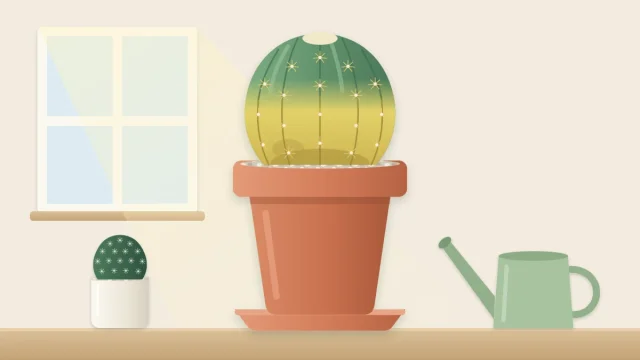
Cactus Turning Yellow or Brown: What the Color Change Can Mean
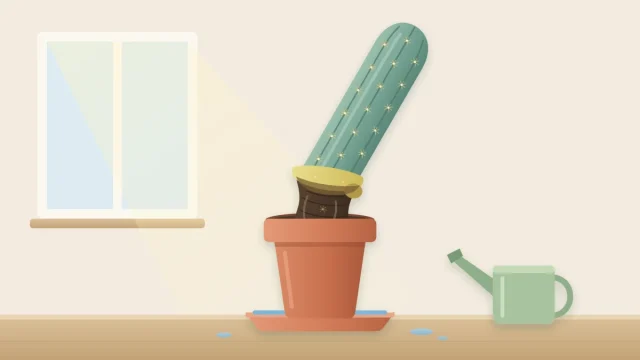
Yellow, tan, brown and reddish color changes on a cactus sorted by pattern, with the checks that separate excess water, low light, scorch, normal corking and rot.
Simple Guides for Growing Healthy Cacti
30 guides published
Yellow, tan, brown and reddish color changes on a cactus sorted by pattern, with the checks that separate excess water, low light, scorch, normal corking and rot.
Sort a soft cactus by how it feels and where the softness is, then check soil, roots and recent temperatures to tell rot, thirst, cold damage and scorch apart.
A symptom table with possible causes and first checks, plus a six-step routine for working out what a struggling cactus is telling you before you change anything.
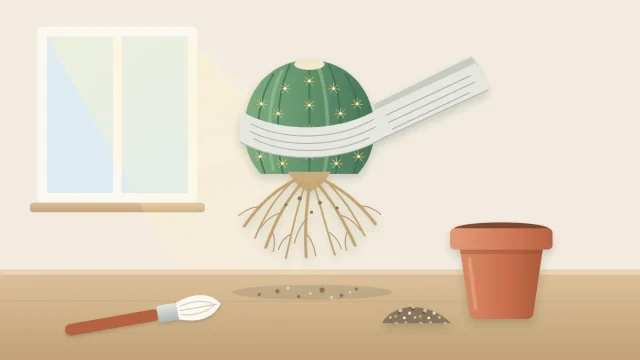
How to slide a cactus out of its pot for a root check, what healthy, dry, rotted and root-bound roots look like, and how to put the plant back with minimal disturbance.
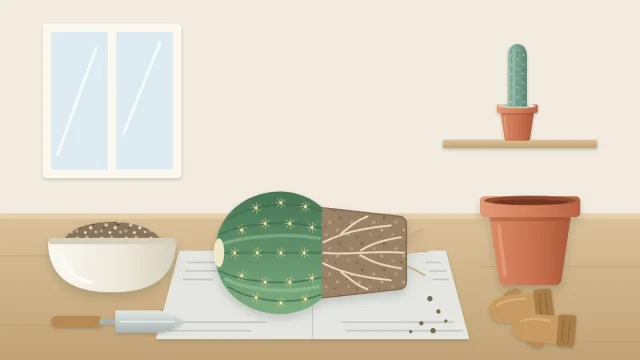
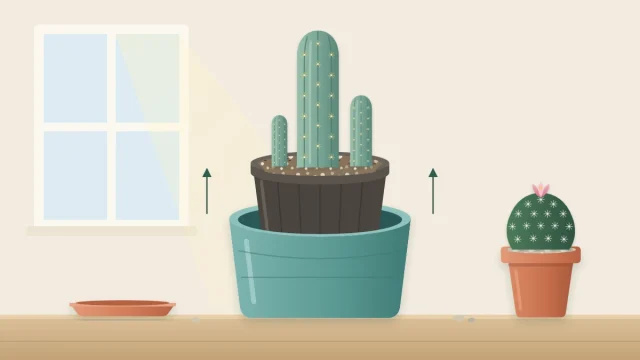
When a cactus needs a new pot, how to get it out without getting spined, how deep to set it in fresh gritty mix, and why the first watering should wait.
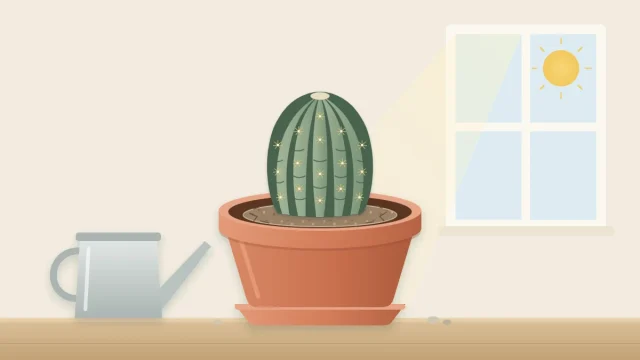
A staged way to move a cactus to a sunnier window or outdoors for summer: what sunburn looks like, how to raise the light step by step, and when to slow down.
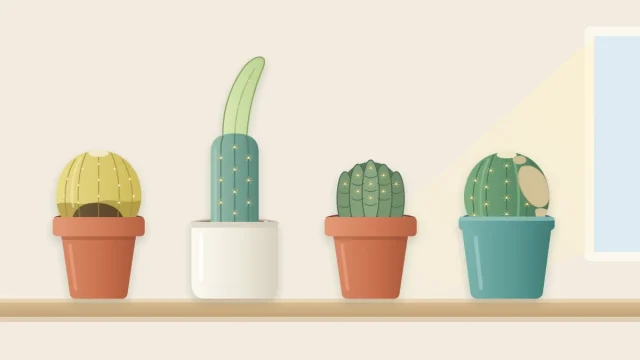
A thin, pale, pointed top means a cactus has been growing in too little light. Learn how to spot stretching early, why the narrow growth is permanent, and the options you have, from brighter light to simply accepting the shape.
Good drainage means a hole in the pot, an open mix and nowhere for water to pool underneath. Find out why a gravel layer cannot stand in for a hole, how to manage saucers and outer pots, and what to do with a container that has no hole.
Deep ribs, a wrinkled body and a very light pot often point to thirst, but damaged roots can look the same. See how to tell them apart, how to re-wet mix that sheds water, and how to rehydrate a cactus without overdoing it.
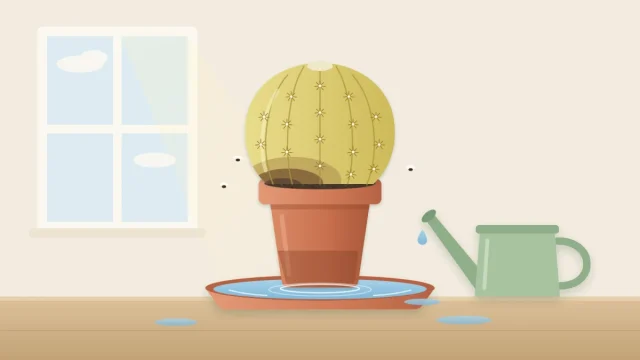
A swollen, pale or soft cactus may have had too much water, but no single sign proves it. Learn which checks confirm it, what keeps a pot wet for too long, and the steps to take before and after you look at the roots.
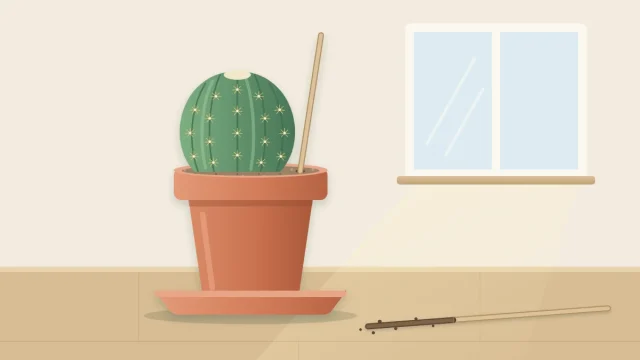
The surface of a pot dries long before the bottom does. Here are simple ways to check moisture at depth, with a wooden skewer, the weight of the pot, the drainage hole and the plant itself, so you know when the mix is truly dry.
Straight spines, hooked spines and glochids each need a different approach. See which tools keep your hands away from a cactus, how to lift a potted plant out and set it down, and what to do if you get spined.