Etiolated Cactus: Why Cacti Stretch and What You Can Do
A thin, pale, pointed top means a cactus has been growing in too little light. Learn how to spot stretching early, why the narrow growth is permanent, and the options you have, from brighter light to simply accepting the shape.

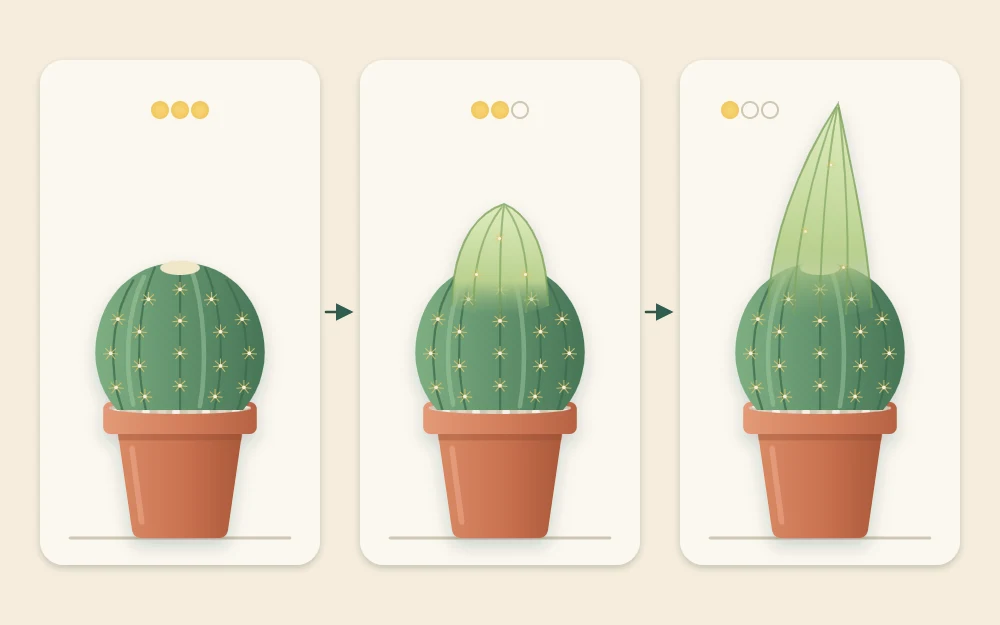
A cactus that was round when you bought it and now has a thin, pale, pointed top is showing etiolation, also called stretching. An etiolated cactus has been growing in less light than it needs, and the shape of its new growth records that.
The stretched part will not return to normal, but the plant is not ruined, and what it grows next is largely up to you.
What etiolation is
A cactus grows from its crown, the growing point at the top. In strong light, new tissue is laid down at the full width of the plant, with firm skin, good color and closely spaced areoles carrying sturdy spines.
In low light, new growth comes in narrower, paler and weaker. The spines are smaller and the areoles sit farther apart. The plant is, in effect, reaching for brighter conditions.
The result depends on the shape of the plant. A globe turns pear-shaped or pointed as a narrow cone rises from its rounded body. A column narrows like the neck of a bottle. A prickly pear makes pads that are long, thin and inclined to droop.
Early signs to watch for
Etiolation is easier to stop than to live with, so it pays to notice it early. Look at the crown from the side every week or two.
- The top of a globe starts to rise into a dome or cone instead of staying flat or gently rounded.
- New growth is a lighter, yellowish green than the body below it.
- New spines are shorter, thinner or fewer, and the areoles are spaced more widely.
- The ribs at the top look thinner and sharper-edged.
- The plant leans steadily toward the window.
A lean by itself is not proof of stretching. A healthy cactus in good light will also tilt toward the brightest side over time, which is why rotating the pot helps. Pale growth has other possible causes too, including recent scorch. It is the combination of a narrowing, paler top and a dim position that points to low light.
Why it happens indoors
Light indoors is far weaker than it appears to your eyes, and it falls off quickly as you move back from the glass. A shelf a few feet into a room can receive a small fraction of the light on the sill. The guide to cactus light requirements explains how to judge what a spot really offers.
Clemson Cooperative Extension’s indoor cacti factsheet says that desert cacti want bright sunlight, such as a south- or west-facing window. Those directions assume the Northern Hemisphere.
Winter is the season when stretching is most likely. Days are short and the light is weak, yet a warm room and regular watering keep the plant growing. Growth made under those conditions is often thin. A cooler, drier winter rest, in which the plant barely grows, avoids much of the problem.
Stretched growth does not fill out again
This is the part that disappoints people. Tissue that formed narrow stays narrow. Moving the plant into better light does not thicken the stretched section, although it may deepen in color.
What better light changes is everything that grows afterward. New growth from the crown comes in at a normal width with normal spines. On a column this leaves a permanent narrow waist with thicker growth above and below it.
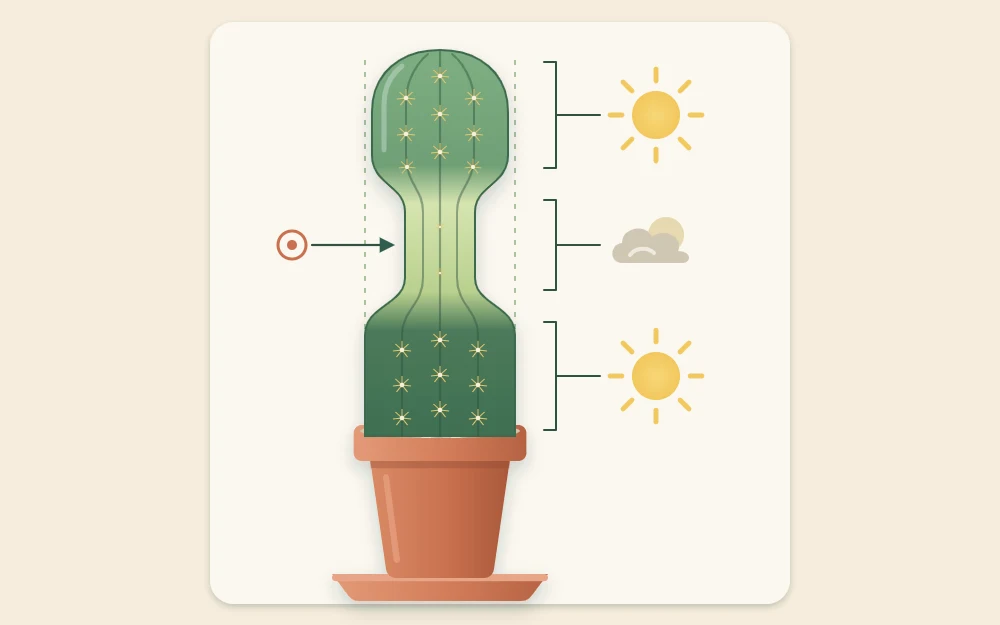
A narrow section is also weaker, so a tall column with a thin waist may need a heavier pot or a stake.
What you can do
Move it to brighter light, gradually
More light is the real fix, but pale, stretched tissue burns easily. Raise the light in stages over a couple of weeks or more, following the steps in the guide on moving a cactus into brighter light without sunburn. For help choosing a better position, see where to put a cactus indoors.
Rotate the pot
Give the pot a quarter turn from time to time while the plant lives indoors, which evens out a lean and helps growth stay symmetrical. Turn the pot, not the plant, and keep your hands below the rim.
Add a plant lamp in a dim home
If no window is bright enough, a lamp made for plants can supplement daylight. Follow the maker’s guidance on distance and running time, and introduce it gradually, as you would the sun.
Accept the shape
A stretched cactus can live for many years. If the plant is otherwise healthy and now sits in good light, leaving it alone is a perfectly reasonable choice. For most globe cacti it is the only practical one.
Cut back a columnar plant
On a columnar cactus, some growers cut the stretched section away with a clean, sharp knife during the growing season, leaving the sturdy lower stem to branch in good light. It is a drastic step that leaves a permanent scar, and it only makes sense once the light problem is solved. A healthy cut piece can sometimes be rooted, though that is a subject for another guide.
Good to know
Before cutting or moving a spiny plant, put on thick leather gloves and steady the stem with a folded newspaper strip used as a sling. Wear eye protection when working on a tall column or at face height. Thin fabric gloves do not stop spines.
Not every tall or narrow cactus is stretched
Some species are naturally slender, and some globes grow into short columns as they age. That is normal growth, not etiolation. The difference is in the quality of the growth, not its height.
Healthy growth keeps a steady width, an even color and dense, well-formed spines from bottom to top. Stretched growth changes abruptly: paler, thinner and more sparsely spined than the older part below it.
Forest cacti follow different rules. A Christmas cactus kept too dark may produce thin, elongated segments, but it wants bright indirect light, not hours of direct sun.
Preventing more stretching
Give the plant the brightest position you have and keep the window glass clean. Where you can, let desert cacti rest cool and nearly dry through the darkest months instead of pushing growth in weak light. Keep checking the crown, because the newest growth is the first place a shortage of light shows.
Frequently asked questions
Can an etiolated cactus go back to normal?
The stretched part cannot. Tissue that grew thin stays thin, although its color may deepen in better light. What changes is the growth that follows: once the plant has enough light, new growth from the crown comes in at a normal width with normal spines, leaving a narrow section below it.
Should I cut the stretched top off a cactus?
It is optional, and only practical on columnar plants. Cutting leaves a permanent scar and helps only if the light has been improved first, otherwise the regrowth will stretch as well. Many growers simply leave the plant as it is. If you do cut, use a clean blade and protect your hands and eyes.
How do I know if a cactus is stretching or just growing?
Compare the new growth with the old. Healthy growth keeps the same width, color and spine density as the rest of the plant. Stretched growth is visibly narrower, paler and more sparsely spined, and usually appears on a plant kept some distance from a bright window.