How to Move a Cactus Into Brighter Light Without Sunburn
A staged way to move a cactus to a sunnier window or outdoors for summer: what sunburn looks like, how to raise the light step by step, and when to slow down.
At a glance
What you need
- Sheer curtain
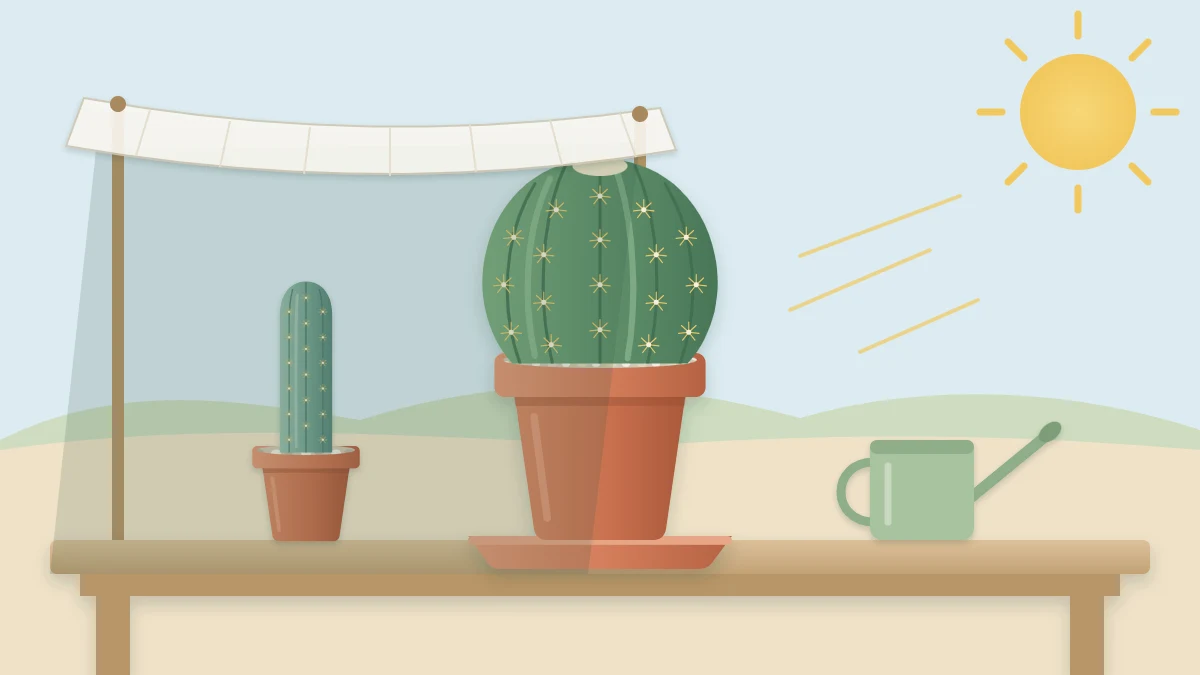
- Shade cloth or a spot in bright shade
- Thick leather gloves
- Folded newspaper sling
- Marker for the sunny side of the pot
A cactus that has spent months on a shop shelf or in a dim room is not ready for a full day of summer sun, even if its wild relatives grow in open desert. Skin that formed in weak light has little protection, and it can scorch within a day or two of a sudden move.
The way to acclimate cactus to sun is to raise the light in small steps over a couple of weeks or more, watching the plant as you go. The stages below work for a move to a sunnier window and for a summer outdoors. If you are not sure how much light your plant wants in the first place, start with the guide to cactus light requirements.
Why desert cacti still burn
A plant builds its skin for the light it is growing in. In strong sun a cactus tends to develop a tougher, waxier surface and denser spines that shade the body. Grown under greenhouse shading, in a shop, or a few feet back from a window, the same plant makes softer skin with far less protection.
Outdoor sun is also much stronger than light through glass, so the jump from a living room to an open patio is bigger than it seems.
Forest cacti are a separate case. Christmas, Thanksgiving and Easter cacti want bright filtered light all year, so outdoors they belong in a shaded spot.
What sunburn looks like
Sunburn usually shows as bleached, yellow-white or tan patches on the side facing the light, often on the upper shoulders of the plant or along the tops of the ribs. Over the following weeks the damaged skin dries, turns corky and stays that way. The patches do not heal or turn green again, although the plant can keep growing and the new growth above them comes in normal.
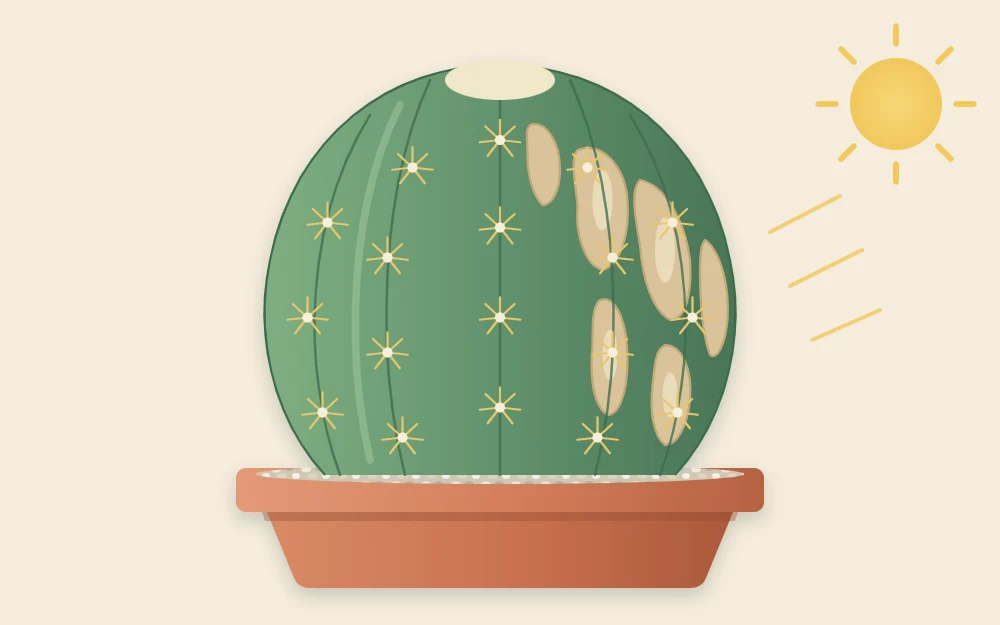
This is different from the reddish, purplish or bronze tint that some species take on in strong light, cold or drought. A stress color is usually an even wash across the exposed surface, the skin stays firm and unbroken, and the tint often fades when conditions ease. Pale patches have other possible causes too, so if the pattern does not fit, compare it with the guide to a cactus turning yellow or brown.
Before you start
Pick a mild spell to begin. A run of overcast days is ideal, and a heat wave is the worst time. Let a newly repotted plant settle first.
A few simple things make the stages easier:
- A sheer curtain for indoor windows, to soften direct sun.
- Shade cloth, or a spot outdoors with open sky but no direct sun, such as under a table or beside a wall.
- Thick leather gloves or a folded newspaper sling for carrying spiny pots.
- A small mark on the pot so you know which side has been facing the sun.
A gradual plan in four stages
The timings here are a rough example, not a rule. Go by what the plant shows you.
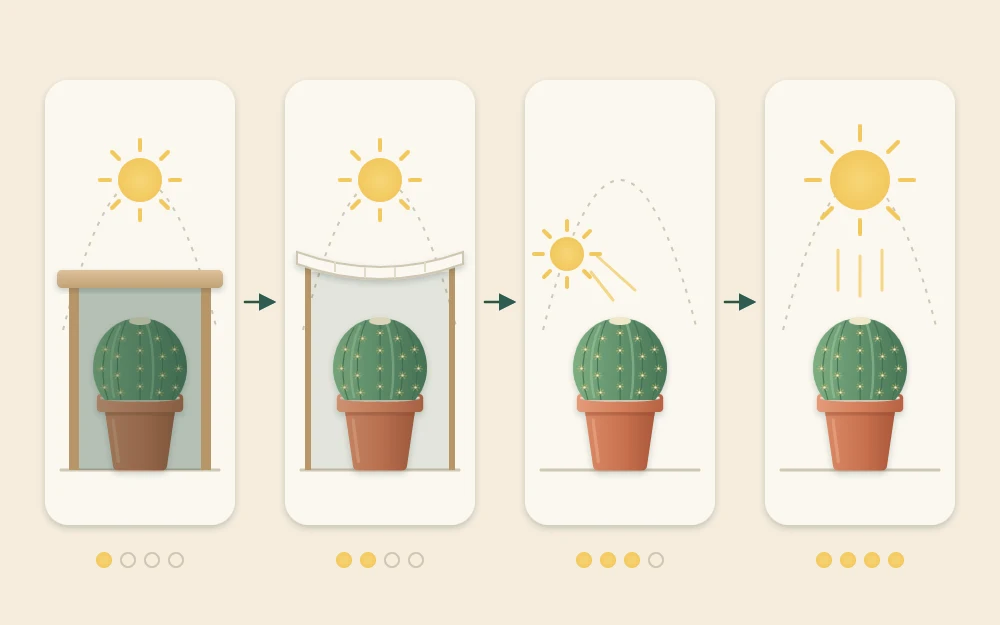
- Bright shade. Set the plant where it has open sky and no direct sun. Leave it there for several days to a week.
- Morning sun. Move it to where it catches an hour or two of early sun, then shade for the rest of the day. Morning sun is gentler than afternoon sun.
- Longer exposure. Over the next week or more, extend the sunny hours little by little toward midday, or thin the shade cloth.
- Full exposure. Let the plant take the full sun of its final spot only if the species wants it and no pale patches have appeared along the way.
Slow down for a plant coming out of a very dim room, one with pale stretched growth at the top, small young plants, and kinds with thin green skin and few spines. Slow down as well in hot climates and at high elevation, where the sun is fiercer.
Tip
Look at the sunny side every day or two during the move. If the skin starts to look paler or yellowish there, step back one stage and wait a week before trying again.
Moving to a sunnier window indoors
Indoor moves are gentler because glass takes the edge off the sun, but they still need care. In the Northern Hemisphere, going from a north-facing room to an unshaded south- or west-facing sill in summer is a big change.
Hang a sheer curtain for the first week or two, or move the pot closer to the glass in steps of a foot or so (about 30 cm) every few days. Early spring is the easy time to make the change, because the sun strengthens slowly and the plant adjusts along with it.
Heat behind glass
Light is not the only risk at a window. On a hot day the air between a closed window and a curtain can become much hotter than the room, and the pot heats up with it.
Good to know
In summer, keep the body of the plant from touching the pane, leave a little space between the pot and the glass, and open the window or a vent where you can. Scorch behind glass is often heat and light acting together.
Keep the same side facing the sun
Once a cactus is acclimated outdoors, only the side that faced the sun is hardened. The shaded side is still soft. Spinning the pot halfway round on a bright day can burn skin that has been in shadow for weeks.
Use the mark on the pot to keep the plant facing the same way, or turn it little by little, a small fraction at a time over several weeks. Indoors, where light is weaker, regular quarter turns from the start are fine and keep growth even.
Timing outdoor moves around cold nights
Most cacti sold as houseplants are not frost hardy. Put them outside only after cold nights have passed in spring; as a rough guide, many growers wait until nights stay above about 50°F (10°C). Bring them back in before such nights return in fall.
The protection a plant built up fades over the darker months indoors, so the staged move needs repeating each spring. The guide to cactus care in winter covers the months in between.
Frequently asked questions
Will sunburn marks on a cactus go away?
No. Scorched skin dries, turns corky and stays as a scar. The plant can carry on growing, and growth that forms after it has adjusted to the light comes in with normal color. Over time new growth makes the old patch less noticeable, but it does not turn green again.
How long does it take a cactus to get used to full sun?
It varies with the species, how dim its previous spot was and how strong the sun is where you live. A couple of weeks is a common minimum, and plants from very low light may need a month or more. Let the look of the sunny side set the pace.
Can I put my indoor cactus outside for the summer?
Many desert cacti do well outdoors in summer if the move is gradual and the pot drains freely. Wait until cold nights have passed, begin in bright shade, add morning sun first, and bring the plant back in before cold nights return in fall.