Where to Put a Cactus Indoors: Windows, Shelves and Desks
A location-by-location guide to placing a cactus at home: sunny sills, spots a few feet back, dim shelves and desks, bathrooms, kitchens and places near heaters, plus where spiny plants are least likely to hurt anyone.
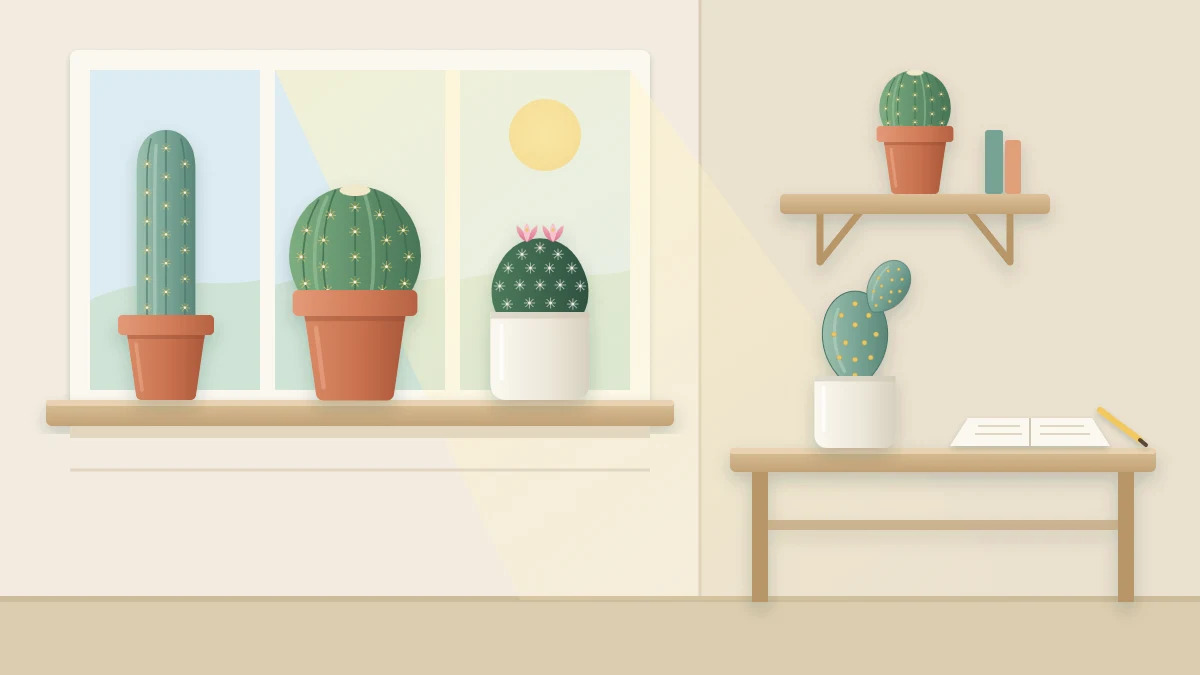
The spot you choose matters more than almost anything you do afterwards. Deciding where to put a cactus indoors is really a decision about light, with temperature, air and safety close behind, and a plant in the right place needs far less rescuing later.
Most of this guide is about desert cacti, which want as much light as a home can give. Forest cacti such as Christmas cactus prefer bright filtered light, so a few locations that fail a desert cactus suit them well. Those cases are pointed out as they come up.
Start with the light, not the decor
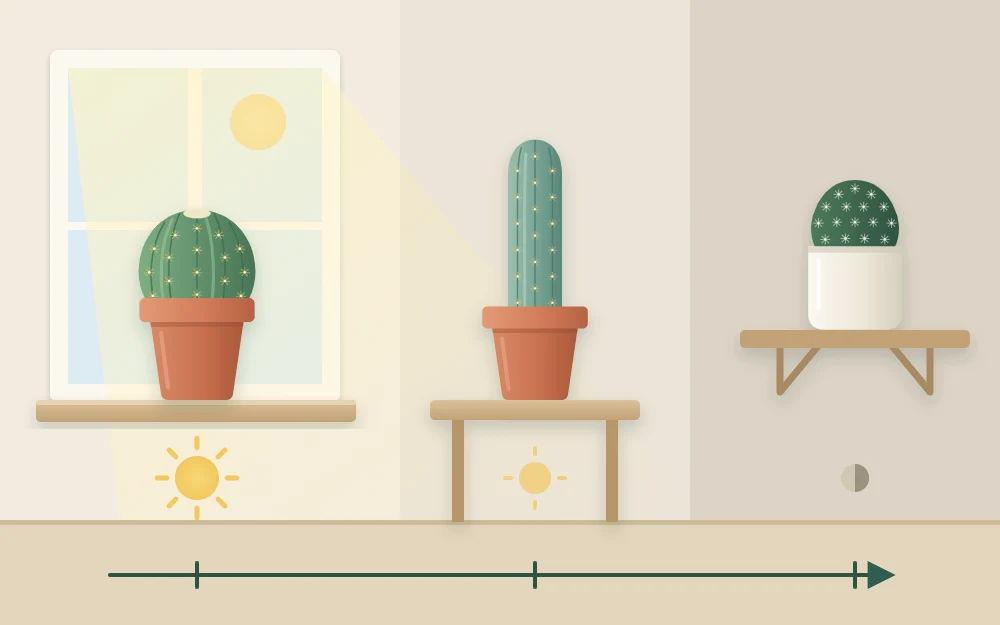
Rooms look much brighter to people than they are to plants, because eyes adjust. Light falls away steeply as you move back from a window, and a shelf that seems pleasantly bright can be far too dim for a desert cactus.
In the Northern Hemisphere, south- and west-facing windows are usually the brightest, east-facing windows give gentler morning sun, and north-facing windows receive little or no direct sun. Trees, neighboring buildings, deep overhangs and net curtains all reduce what arrives. The guide to cactus light requirements explains how to judge a window, including a simple shadow test.
| Location | Light a plant gets | Suits |
|---|---|---|
| Sunny windowsill | Brightest, with direct sun | Most desert cacti |
| A few feet back from a bright window | Much lower, mostly indirect | Forest cacti; a few tolerant desert kinds |
| Shelf or desk far from a window | Low | Desert cacti only with a plant lamp |
| Bathroom or kitchen | Varies, often low, with more humidity | Forest cacti, if there is a window |
Sunny windowsills
A sill in a sunny window is the best place in most homes for desert cacti. Plants sit right at the glass, where the light is strongest, and you see them often enough to notice changes.
Two things are worth watching. In summer, the air between the glass and a curtain or blind can become very hot, and a plant pressed against the pane may scorch on the side facing the sun. A little space behind the pot and some air movement help. In winter, the glass itself gets cold. On freezing nights, move pots a short way back so that no part of the plant touches the pane, and do not shut them between a curtain and the window.
Bright rooms, a few feet back
A table 3 to 5 ft (about 1 to 1.5 m) from a sunny window looks bright, but the plant there receives a great deal less light than one on the sill, and little or no direct sun. Some desert cacti hold their shape here for a while, particularly in a room with large windows, but many slowly stretch toward the glass.
This zone is a good fit for forest cacti, which can redden or scorch in harsh direct sun. For a desert cactus, treat it as a second choice and watch the new growth at the crown. If it comes in thinner or paler, move the plant closer.
Shelves and desks far from a window
Bookshelves, office desks and the corners of rooms are where cacti are most often placed and where they most often decline. The light is usually too low for a desert cactus to grow normally. The plant may look unchanged for months, since cacti are slow to show stress, and then produce a thin, pale, pointed top.
If the desk is where you want the plant, a plant lamp positioned close above it and run for a good part of the day can make the spot workable. Without one, consider rotating plants between the desk and a sunny sill, or choosing the desk for a forest cactus near a window instead.
Bathrooms and kitchens
Bathrooms tend to be humid and are often dim, with small or frosted windows. That combination suits desert cacti poorly, because the mix dries slowly and the light is weak. A forest cactus is a better match, provided the room has a window that gives real daylight.
Kitchens vary. A bright kitchen windowsill can be a fine place for a desert cactus. Keep plants away from the stove, where heat and grease settle on them, and away from the splash of the sink.
Heaters, vents and drafty doors
Cacti tolerate dry air well, but not a constant blast of it. Directly above a radiator or in the stream from a heating or air-conditioning vent, a plant is heated or chilled unevenly and its mix dries erratically. A shelf above a radiator is also warm in winter, exactly when a desert cactus is better off cool and resting.
Avoid spots beside an outside door that opens often in cold weather.
Safe placement for people and pets
A good spot for the plant also has to be a sensible one for the household.
- Keep spiny plants out of walkways and away from the arms of sofas and chairs.
- Leave space between plants and curtains, which can catch on spines and drag a pot over.
- Place them above the reach of small children and where pets cannot brush against, chew or knock them.
- Use a pot heavy and wide enough that a tall plant does not tip, and avoid narrow ledges.
- Give prickly pears and bunny ears the most room, since their glochids detach at a touch.
Good to know
When you move a plant to a new spot, hold the pot, not the plant, and wear thick leather gloves. Thin fabric gloves do not stop spines. The guide on how to handle a cactus safely covers slings, tongs and what to do about a stuck spine.
Rotate pots and group by need
Window light comes from one side, so give each pot a quarter turn from time to time to keep growth upright and even.
Grouping plants with similar needs makes care simpler. Keep desert cacti together in the brightest position and forest cacti together in softer light, so you are not tempted to water them all alike. Once the plants are settled, the wider guide to indoor cactus care covers mix, pots, watering and winter rest.
Frequently asked questions
Which window is best for a cactus?
In the Northern Hemisphere, a south- or west-facing window usually gives a desert cactus the most light, with an unobstructed east-facing window as a workable second choice. Forest cacti such as Christmas cactus prefer bright filtered light, so an east-facing window or a spot set back from a sunnier one suits them better.
Can a cactus live on an office desk?
Only if the desk is right beside a bright window or the plant has a lamp made for plants close above it. Ordinary room lighting is usually too weak for a desert cactus, which may look unchanged for months before growing a thin, pale top. A forest cactus near a window copes better.
Is a bathroom a good place for a cactus?
Usually not for a desert cactus. Bathrooms are often dim and humid, so the mix dries slowly and the plant gets too little light. A forest cactus such as a Christmas cactus is a better fit, as long as the bathroom has a window that lets in real daylight.
