Cactus Drainage: Holes, Gravel Layers and Saucers Explained
Good drainage means a hole in the pot, an open mix and nowhere for water to pool underneath. Find out why a gravel layer cannot stand in for a hole, how to manage saucers and outer pots, and what to do with a container that has no hole.
“Give it good drainage” appears in almost every piece of cactus advice, usually without saying what it means. Cactus drainage is not a single feature you can buy. It is three things working together, and if one is missing the other two cannot make up for it.
Once you understand how water leaves a pot, most of the common questions about gravel layers, saucers and pots without holes answer themselves.
What drainage actually is
Drainage is excess water leaving the pot and air returning to the mix. When you water thoroughly, the spaces between the particles fill with water. In a pot that drains, most of that water runs out of the bottom within moments, and air is drawn back into the spaces behind it.
That returning air is the point. Desert cactus roots need oxygen, and roots held in airless, saturated mix are the ones that rot. Forest cacti such as Christmas cactus like more moisture, but they need air around their roots as well.
The three parts of a pot that drains
- A hole in the pot. Water needs an exit at the lowest point. One generous hole or several small ones both work. Size, material and shape matter too, and the guide to the best pots for cactus compares them.
- An open mix. A hole cannot drain a mix that holds on to water like a sponge. Coarse particles such as pumice or perlite keep channels open, and water passes through instead of staying put. The guide to cactus soil explains what goes into a gritty mix.
- Nowhere to pool underneath. Water that has left the pot must not sit against the base, where the mix soaks it up again.
Why a gravel layer does not replace a hole
A layer of gravel or pebbles at the bottom of a pot looks as if it should help. In practice, water does not move easily from a fine-textured mix into a layer of much coarser material. It tends to stay in the mix until the mix is saturated, so a wet zone forms just above the gravel.
In a container with no hole, whatever does trickle into the gravel has nowhere to go. It collects, rises as you water again and keeps the mix above it wet. The gravel also takes up room, which lifts that wet zone closer to the roots.

In a pot that has a hole, a gravel layer is not needed either. Fill the whole pot with the same gritty mix from top to bottom.
Covering the hole to keep the mix in
A gritty mix can trickle out of a large hole. Cover the hole with something that holds particles back but lets water through: a small square of plastic or fiberglass mesh, or a curved piece of broken pot laid with its hump upward. Avoid anything that seals the hole.
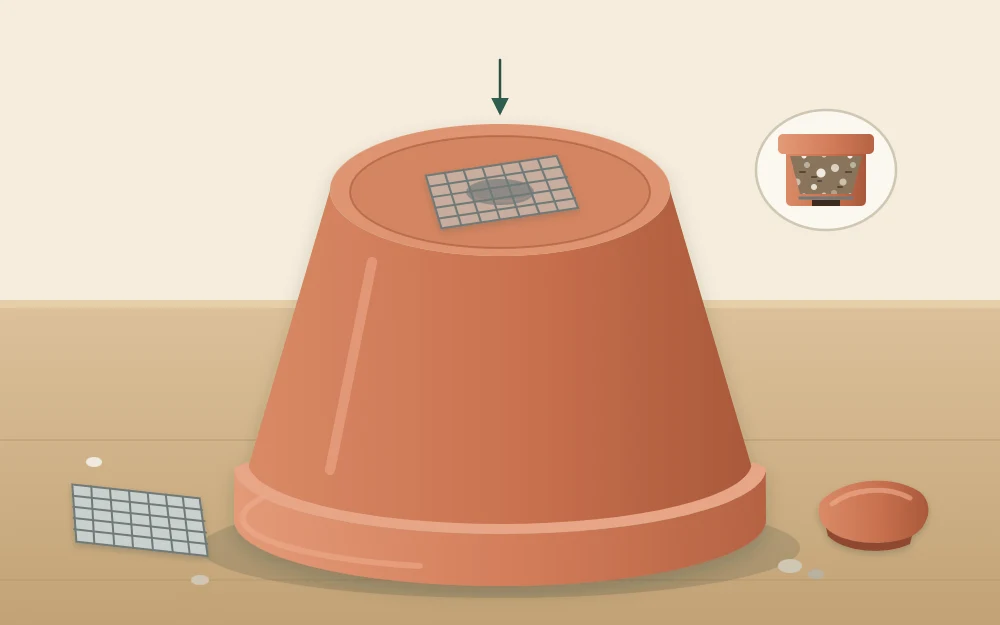
From time to time, check that the hole is still clear of roots and compacted mix.
Saucers and decorative outer pots
A saucer protects the furniture, and that is all it should do. Empty it after watering, once the pot has finished dripping. Clemson Cooperative Extension’s indoor cacti factsheet states that pots should never stand in water.
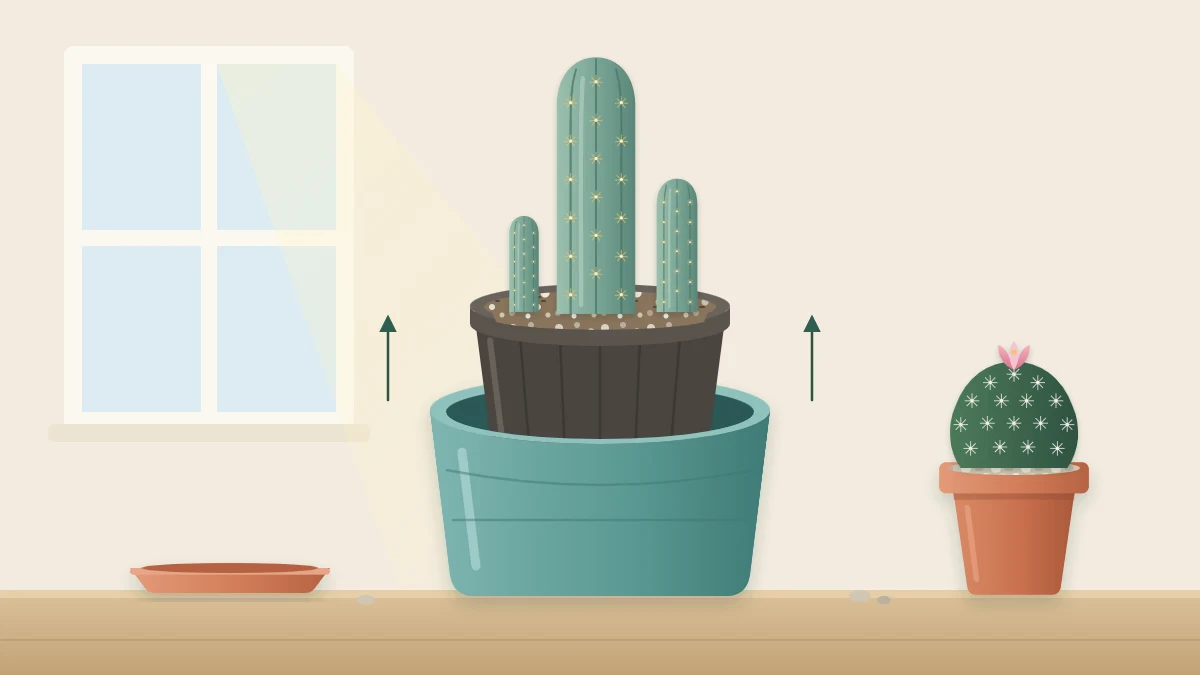
An outer pot, the decorative kind without a hole, hides the problem better than a saucer does. Water gathers at the bottom, out of sight, and the inner pot sits in it. Either lift the inner pot out after watering and pour the water away, or water the plant at the sink and return it once it has drained.
Good to know
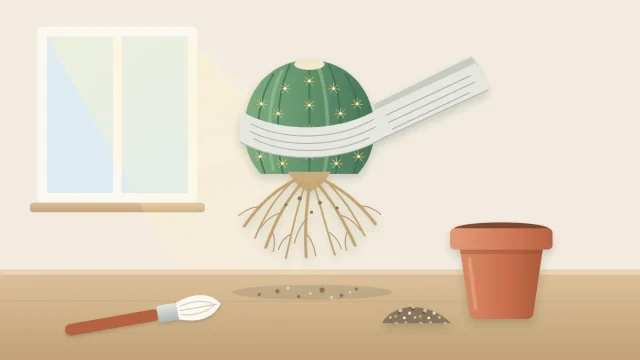
Lift a spiny plant by its pot, not by its body, and wear thick leather gloves if the plant overhangs the rim. For a pot that is awkward to grip, wrap a folded newspaper strip around the plant as a sling to steady it.
Containers without holes, from safest to riskiest
- Use it as an outer pot. Keep the cactus in a plain nursery pot with holes and set that inside the decorative container. You get the look you want, and the plant keeps its drainage.
- Have a hole drilled. Many containers can be drilled with a bit made for the material, such as a masonry bit for terracotta or a diamond-tipped bit for glazed ceramic and glass. Work slowly, wear eye protection and accept that ceramic and glass can crack. If you are unsure, ask someone with experience.
- Plant directly and accept the risk. With no exit, every drop you pour stays in the container, and you cannot see how much has gathered at the bottom. The margin for error is small, and losses to rot are much more likely.
Glass terrariums belong at the risky end. They have no hole, and their walls hold humid, still air around the plant. Desert cacti are suited to dry air and a mix that dries quickly, so a closed or deep glass container suits them poorly.
What a gravel top dressing does and does not do
A top dressing is a thin layer of gravel or grit spread over the surface of the mix. It should not be confused with a gravel layer at the bottom.
It keeps the base of the plant off damp mix, stops light particles such as perlite from floating up when you water, and reduces splashing. It also looks tidy. It does not improve drainage, and it can slow evaporation from the surface a little.
The main drawback is that it hides the mix, so you cannot judge moisture by eye. Check at depth with a wooden skewer instead.
How to tell whether your pot drains well
Watch what happens when you water. In a well-drained pot, water sinks into the surface quickly instead of pooling, and it starts to run from the hole soon after.
How long the mix then takes to dry depends on the pot, the mix, light, temperature, humidity and season. A pot that stays damp at depth long after others of its size have dried may be missing one of the three parts.
Poor drainage is one of the conditions most often behind rotting roots. If a plant in a slow pot turns soft at the base or stops growing, see the guide to cactus root rot for what to check next.
Frequently asked questions
Does a cactus pot need a drainage hole?
For practical purposes, yes. A hole lets excess water leave and air return to the roots after each watering. Without one, water gathers unseen at the bottom of the container and the mix stays wet. If you love a pot with no hole, use it as an outer pot around a nursery pot that drains.
Should I put rocks in the bottom of a cactus pot?
No. A layer of rocks or gravel does not drain a pot. Water tends to stay in the finer mix above the layer until that mix is saturated, and in a closed container it simply collects among the stones. Fill the pot with gritty mix from top to bottom and rely on a drainage hole.
Can a cactus live in a glass terrarium?
It is a poor match for desert cacti. A glass container has no drainage hole, and its walls hold humid, still air around the plant, while desert cacti do best with dry air and a mix that dries quickly. An open, shallow dish is less risky than a deep or closed one, but a draining pot is better.