Cactus Soil: What Makes a Good Mix
What a cactus mix should contain and why: the job of each ingredient, a simple starting ratio to adjust for your home, two quick tests, and what to leave out.
Regular potting soil is made to hold water for thirsty, leafy plants. That is the opposite of what a desert cactus needs, which is why cactus soil gets so much attention: the mix around the roots decides how long they stay wet after every watering.
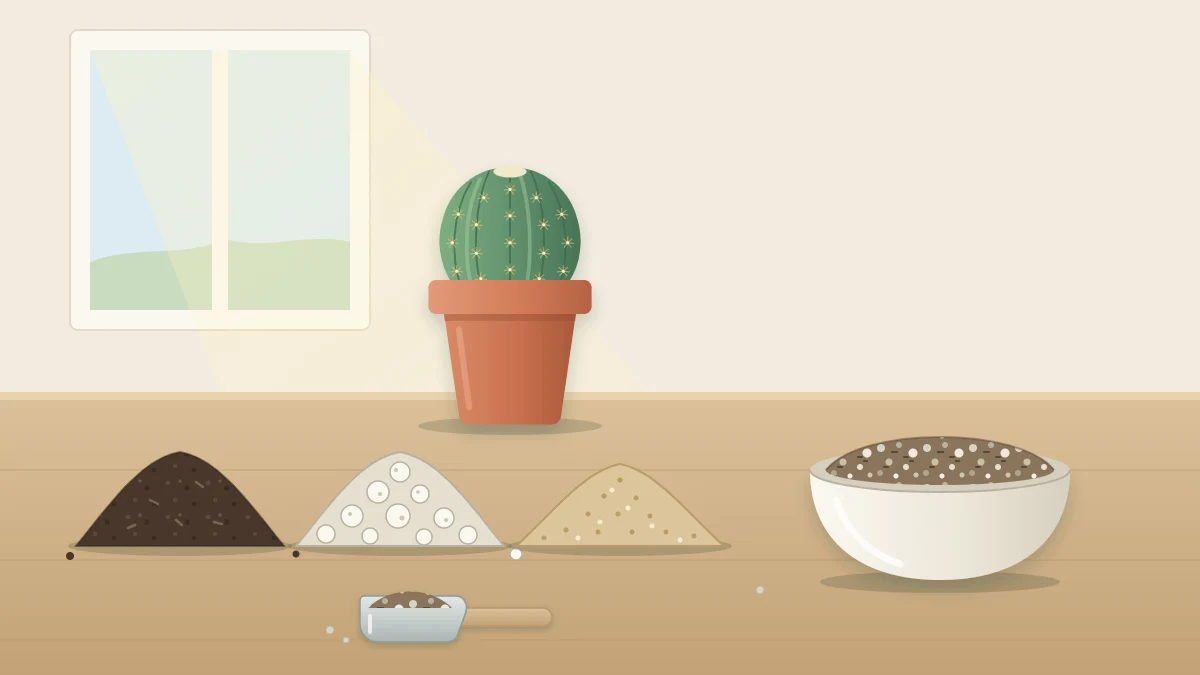
A good mix is not complicated or exotic. It is simply ordinary potting material opened up with coarse mineral grit until water runs through quickly and air follows it in. Once you know what each ingredient does, you can judge a bagged mix or adjust your own.
Why drainage and air matter more than nutrients
Roots need oxygen. In a dense, fine-textured soil, the small spaces between particles fill with water and stay full for a long time, leaving little room for air. Desert cactus roots are adapted to soil that is drenched briefly and then dries, and they are prone to rot when kept wet and airless.
Nutrients are a much smaller concern. These plants grow slowly and are used to lean ground, so a rich mix offers little advantage and a wet one carries real risk. Clemson Cooperative Extension’s indoor cacti factsheet recommends a very well-draining mix for this reason.

What each ingredient does
Every component in a mix either holds water or opens the mix up. The skill is in the balance.
Ingredients that hold water
- Potting soil. A general-purpose blend, usually based on peat or coir with some bark or compost. It holds moisture and supplies a modest amount of nutrients.
- Peat. Holds a great deal of water. When it dries out completely it can become water-repellent, so that water runs down the inside of the pot instead of soaking in.
- Coir. Coconut fiber, used in a similar way to peat. It generally re-wets more easily.
Ingredients that open the mix
- Pumice. A lightweight, porous volcanic rock. It creates air spaces, does not break down and is heavy enough to stay put when you water.
- Perlite. White, very light, puffed volcanic glass. It opens the mix well and is widely available, though it tends to float to the surface over time.
- Coarse sand or fine gravel. Sharp, gritty particles a little smaller than a peppercorn up to small pebbles. They add weight and drainage.
Bagged cactus mix: a starting point
Bags labeled for cacti are a convenient base, but they vary a good deal. Some are noticeably gritty. Others look and feel much like ordinary potting soil with a little sand added, and stay damp for a long time indoors.
Open the bag and look. If the contents are mostly dark, fine and spongy, plan to add grit. If you can see plenty of coarse mineral particles throughout, it may be fine as it is. The two tests further down will tell you more than the label does.
A simple starting ratio
A common starting point for desert cacti is roughly equal parts by volume:
- 1 part bagged cactus mix or potting soil
- 1 part pumice, perlite or other coarse grit
Treat this as a first attempt to adjust, not a formula. The right balance depends on where the pot will live and what it is made of.
- Add more grit if your home is humid, cool or short of strong light, if the pot is plastic or glazed, or if the pot is large. All of these slow drying.
- Keep a little more of the water-holding part if your plants sit in hot, dry, very sunny conditions in small unglazed terracotta pots, where a very gritty mix can dry almost too fast to be practical.
The container matters as much as the contents, so read about choosing a pot by size and material alongside this.
Tip
Mix ingredients slightly damp and outdoors or in a well-aired room, since dry perlite and peat are dusty. Blend a small batch first, test it, and adjust before you make more.
Two quick tests: squeeze and drain
The squeeze test
Moisten a handful of mix so that it is damp but not dripping, squeeze it firmly in your fist, then open your hand. A suitable mix falls apart, or crumbles at a light touch. If it stays in a tight, smooth ball like modeling clay, it holds too much water and needs more grit.
The drain test
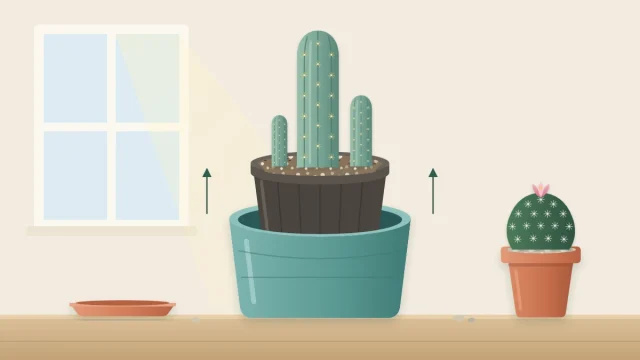
Fill an empty pot with the mix and water it over a sink. Water should sink in at once and begin running from the drainage hole within a few seconds. If it pools on the surface, or the pot is still dripping heavily and feels waterlogged many minutes later, the mix is too dense.
Neither test is precise, but together they show clearly whether a mix is in the right range. Remember that even a perfect mix cannot drain from a pot that has no outlet. The guide to cactus drainage, holes and saucers covers that side.
What to avoid
- Fine play sand or beach sand. Small, rounded grains settle into the gaps between larger particles and make a mix denser, not more open. Beach sand may also carry salt.
- Heavy garden soil. It compacts in a pot, drains poorly and can bring in pests and weed seeds.
- Mixes sold for moisture retention. Blends with added water-holding crystals or labeled as moisture-control are designed to do the reverse of what you want.
- Old, broken-down mix. Organic material decomposes into finer particles over the years, so a mix that once drained well can gradually turn dense and stay soggy.
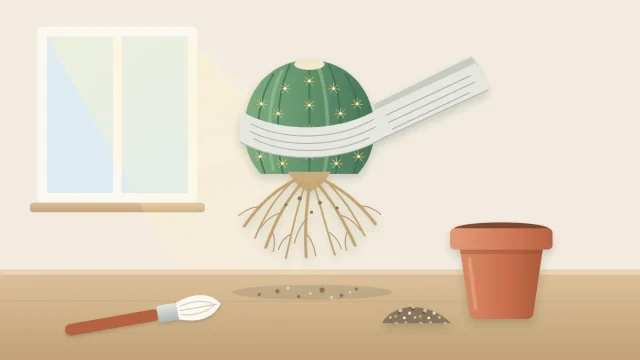
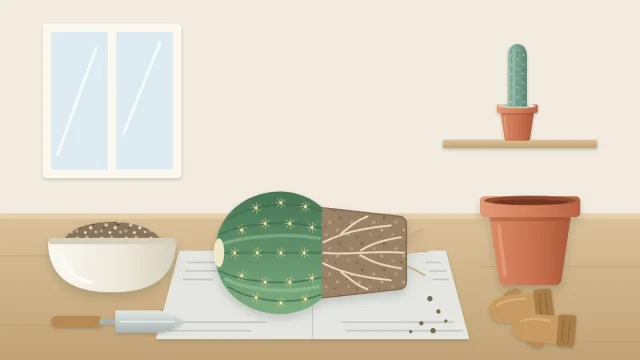
If the soil in a pot has reached that last stage, or a new plant arrived in dense, peaty nursery soil, replacing it is usually worthwhile. Follow the steps for repotting a cactus safely, including protection for your hands and a pause before the first watering.
Forest cacti want something richer
Christmas, Thanksgiving and Easter cacti grow on trees in humid forests, with their roots in pockets of leaf litter. They prefer a mix with more organic matter than a desert cactus would tolerate, such as potting soil lightened with bark or perlite. It still has to drain freely and must never stay soggy.
Frequently asked questions
Can I use regular potting soil for a cactus?
On its own it usually holds too much water for a desert cactus, especially indoors where pots dry slowly. It works much better as one part of a mix. Blending it with a similar volume of pumice, perlite or other coarse grit is a common starting point that you can then adjust.
Is pumice better than perlite for cactus soil?
Both open up a mix and improve drainage. Pumice is heavier, so it stays mixed in and helps steady the pot. Perlite is lighter, easier to find and tends to float to the surface when you water. Use whichever you can get; the proportion matters more than the choice.
How often should cactus soil be replaced?
There is no fixed interval. Replace the mix when it has broken down into fine, dense material, when it stays wet much longer than it used to, or when the plant has outgrown its pot. Many cacti are happy in the same mix for several years if it still drains well.