Best Pots for Cactus: Size, Material and Shape
How to choose a pot for a cactus: a drainage hole first, a snug size, a material that dries at the right speed, and a shape that matches the roots and keeps tall plants stable.
The pot is half of the watering equation. It decides how much soil surrounds the roots, how fast that soil dries and whether surplus water can escape at all. So the best pots for cactus plants are rarely the most decorative ones on the shelf. They are the ones that drain, fit closely and suit the shape of the plant.
Three questions settle most choices: does it have a drainage hole, is it the right size, and what is it made of?
Start with a drainage hole
A hole in the base is the one feature you should not compromise on. It lets you water thoroughly and be sure the excess has left, and as water runs out it draws fresh air into the mix behind it.
In a container with no hole, extra water gathers at the bottom, out of sight, and the lower roots sit in it. A layer of gravel under the soil does not change that. If you love a pot that has no hole, there are ways to use it without planting directly into it. The guide to cactus drainage, gravel layers and saucers sets out the options.
Size: only a little bigger than the plant
It is tempting to give a small cactus plenty of room to grow. In practice a large pot works against it. The roots of a small plant reach only part of the soil, and the remaining soil stays wet for a long time because nothing is drawing water from it.
A snug pot dries evenly and quickly. As a rough guide for a globe-shaped plant, look for about 1 in (2.5 cm) of space between the body and the rim all around, a little more for a large specimen. For a columnar plant, judge by the root ball instead of the stem: the pot should hold the roots comfortably without a wide ring of empty soil around them.

The same rule applies when a plant outgrows its container. Clemson Cooperative Extension’s indoor cacti factsheet advises repotting only when needed, into a pot only slightly larger.
Material: how fast the pot dries
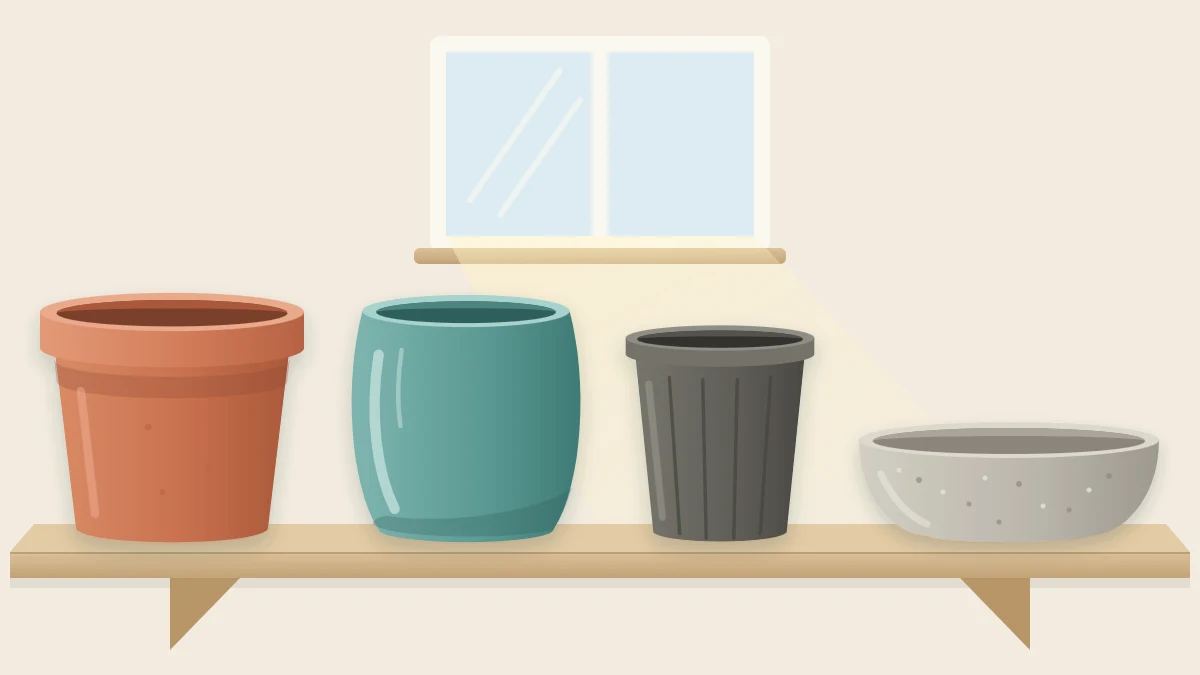
Pot walls are either porous or sealed, and that difference changes how soon the mix dries. Unglazed terracotta is porous, so moisture evaporates through the sides as well as from the surface. Glazed ceramic and plastic are sealed, so water leaves only from the top and through the hole.
| Material | How fast it dries | Weight | Good for |
|---|---|---|---|
| Unglazed terracotta | Fast; walls breathe | Medium to heavy | Most desert cacti, humid or cool homes, anyone prone to overwatering |
| Glazed ceramic | Slow | Heavy | Tall plants that need a stable base; use a grittier mix |
| Plastic | Slow | Light | Small plants in hot, bright, dry spots; slipping inside a decorative outer pot |
| Concrete or stone | Varies with thickness and sealing | Very heavy | Large, top-heavy plants that stay in one place |
None of these is wrong. A cactus can thrive in plastic if the mix is gritty and you wait for it to dry, and it can rot in terracotta if it is watered too soon. Terracotta simply gives a beginner more margin. It also darkens when damp and pales as it dries, which is a helpful visual clue.
Shallow or deep: match the roots
Pot shape should follow root shape. Many globe-shaped cacti have shallow, fibrous roots that spread sideways just under the surface. They sit well in a pot that is wider than it is tall, such as a bowl or a pan, where there is no deep column of unused soil staying wet beneath them.
Some species instead grow a thick, carrot-like taproot. They need a deeper pot so the taproot can point straight down without being bent or pressed against the base. You will only know which you have by looking, so check the roots the next time the plant is out of its pot.
Tall plants need weight and width
Columnar cacti and prickly pears become top-heavy as they grow, and a gritty mix is lighter than it looks once dry. A tall plant in a narrow, lightweight plastic pot can be tipped by a breeze through a window or a passing sleeve.
Choose a heavy pot with a wide base for these plants: thick terracotta, glazed ceramic or concrete. A layer of gravel used as a top dressing adds a little more weight and steadies the base of the stem.
Good to know
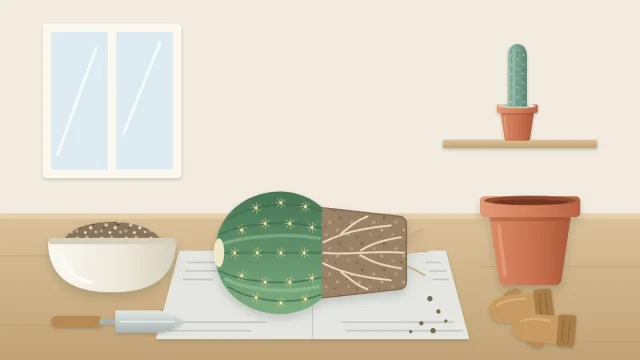
A falling cactus injures whatever it lands on, including you. Keep tall plants out of walkways, and when you move or repot one, wear thick leather gloves, support the stem with a folded newspaper sling, and protect your eyes if the plant reaches face height.
Saucers and decorative outer pots
A saucer protects furniture, but it is also where drained water collects. Empty it once the pot has finished dripping so the base of the root ball does not sit wet.
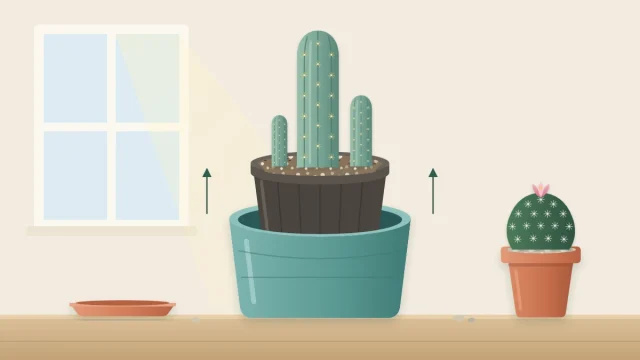
An outer pot, a decorative container with no hole, works the same way on a larger scale. Keep the cactus in a plain pot that drains, set that inside the outer pot, and lift it out to water or tip the outer pot empty afterward. Leave a small gap around the inner pot so air can move.
How pot choice changes when you water
Everything above comes back to drying time. A small, shallow terracotta pot in a sunny window dries quickly, so the plant will be ready for water sooner. A large glazed pot in the same window stays damp much longer, and in a dim room longer still.
That is why no pot can be judged apart from what goes in it. A slow-drying container calls for a grittier mix, and a fast-drying one can carry a little more organic material. The guide to what makes a good cactus mix explains how to adjust the blend to suit the pot.
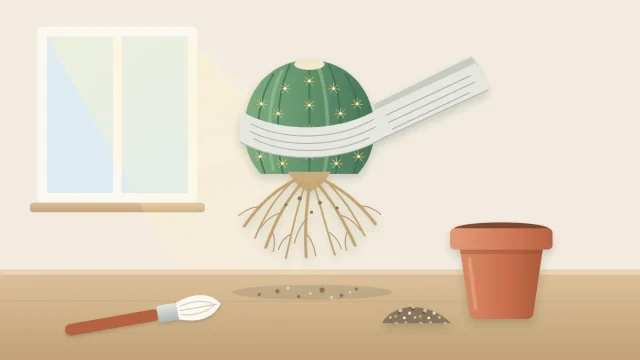
Whenever you change the pot, expect the watering rhythm to change too, and check the mix at depth for the first few weeks instead of relying on habit. When you are ready to make the move, follow the steps for repotting a cactus step by step.
Frequently asked questions
Do cacti like small pots?
Most do better in a pot that fits closely than in a roomy one. A small volume of mix dries quickly and evenly, which suits desert cacti. The pot should still hold the roots without cramming them, with a small margin of fresh mix around the root ball.
Is terracotta or plastic better for a cactus?
Unglazed terracotta dries faster because its walls are porous, which gives more margin for error, especially in cool, humid or dim homes. Plastic holds moisture longer and is lighter. Either can work if the pot has a drainage hole, the mix is gritty and you wait for it to dry.
Can I plant a cactus in a pot without a drainage hole?
It is much riskier, because excess water collects at the bottom where you cannot see it. A safer approach is to keep the plant in a plain draining pot and stand that inside the decorative container, lifting it out to water or tipping away what collects afterward.