Underwatered Cactus: Signs and How to Rehydrate It
Deep ribs, a wrinkled body and a very light pot often point to thirst, but damaged roots can look the same. See how to tell them apart, how to re-wet mix that sheds water, and how to rehydrate a cactus without overdoing it.

Cacti are built to go without water, which is why an underwatered cactus is less common than people expect and why it usually recovers well. It does happen, though: a plant forgotten on a hot sill, a small pot in summer, or a mix that has dried so hard that water runs straight past it.
Before you reach for the watering can, make sure thirst is the real issue. A shrunken, wrinkled plant can also be one whose roots no longer work, and more water makes that worse.
Signs commonly associated with too little water
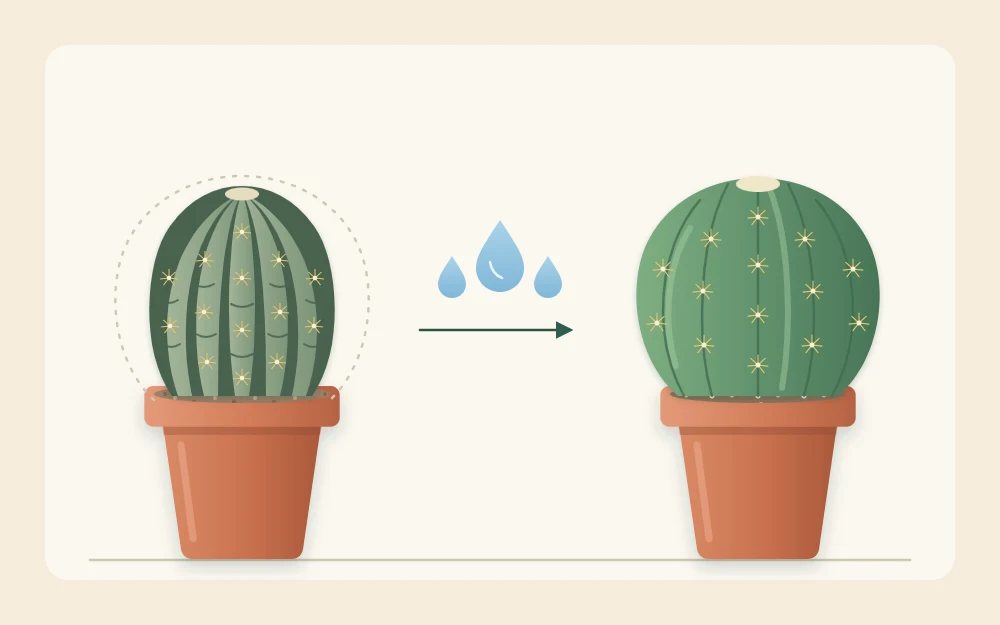
- Ribs that draw in and deepen, or tubercles that shrink and flatten
- A shrunken or wrinkled body, often puckered near the base first
- Dull color, sometimes with a reddish or purplish tint in certain species
- A soft but leathery feel, like a slightly deflated ball, with no wet or mushy areas
- On prickly pears, pads that thin, wrinkle and droop
- Soil that has pulled away from the pot wall
- A pot that feels very light
- Dry, brittle roots, if you look below the soil
Thirst or root trouble? Check first
These signs overlap with root damage. Roots that have rotted or died cannot take up water, so the plant above them shrivels even though the mix is wet. Watering such a plant adds to the problem. A few checks separate the two:
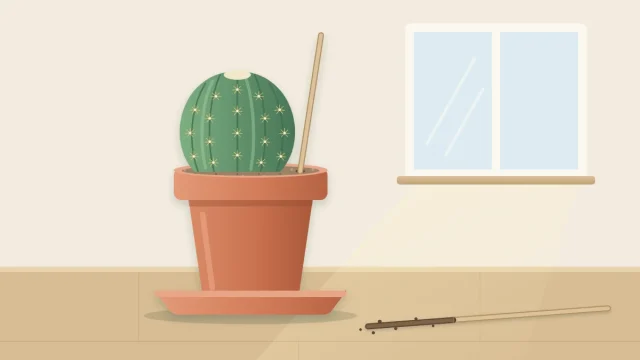
- The mix at depth. Use the methods in the guide to checking cactus soil moisture. If the pot has been dry to the bottom for a long time, thirst is the likely explanation. If it is damp at depth and the plant is still shriveled, do not water; look at the roots.
- The feel of the plant. Thirst tends to leave the whole body evenly leathery and dry. Wet, dark or mushy tissue at the base suggests something else.
- Recent history. Think about when the plant last had a thorough watering, whether it has been through a hot, bright spell, and whether it has received only small sips that wet the top of the pot.
- The roots, if in doubt. Thin, dry, brittle roots fit a long drought. Dark, soft roots point toward rot.
Good to know
If you slide the plant out to see the roots, protect your hands. Wear thick leather gloves or wrap a folded newspaper strip around the body as a sling, and use eye protection with tall plants. Thin fabric gloves do not stop spines.
Shrinking in winter is usually normal
During a cool, dim winter rest, desert cacti are kept nearly dry, and many shrink a little. The ribs draw in and some globe-shaped plants sink slightly toward the soil. Clemson Cooperative Extension’s indoor cacti factsheet describes watering desert cacti during winter rest only enough to keep them from shriveling.
Slight shrinkage in a resting plant is not an emergency, and the plant fills out again when growth and watering resume in spring. A heavy soak for a resting plant in a cold room is the riskier choice. The guide to cactus dormancy covers what to expect through the seasons.
Marked shriveling in a warm room is a different matter. A plant kept warm all winter is not fully at rest, and it may need a modest watering once its mix has dried through.
How to rehydrate a thirsty cactus
- Confirm that the mix is dry to the bottom and that the base of the plant is firm.
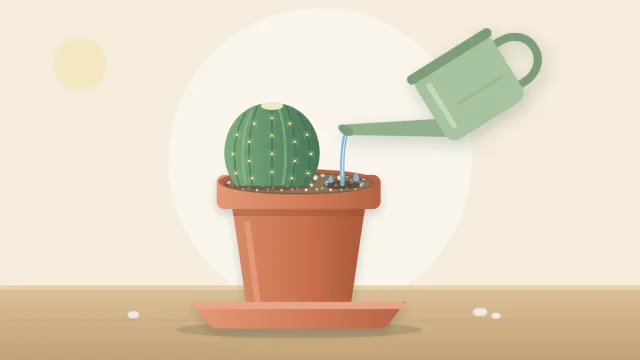
- Water thoroughly at the soil until water runs from the drainage hole. Watch how it behaves: if it races down the gap between the mix and the pot wall and pours out within seconds, the mix has not absorbed it.
- Let the pot drain completely and empty the saucer.
- Wait for the mix to dry through before watering again.
The full method, including how to keep water off the body and out of the crown, is in how to water a cactus.
Re-wetting mix that repels water
Mixes that contain a lot of peat can turn water-repellent once they dry out hard. Water beads on the surface, runs off or slips down the sides, and the root ball stays dry in the middle.
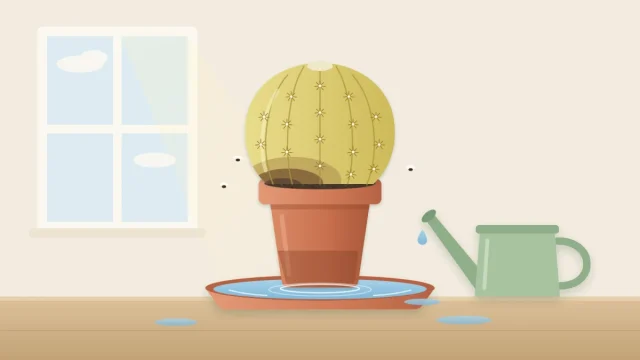
Standing the pot in a tray of water lets the mix absorb moisture from below. Fill the tray so the water comes partway up the pot, and leave the pot there for a short while, roughly 10 to 30 minutes, until the surface darkens or the pot feels clearly heavier. Then lift it out and let it drain fully. Do not leave it standing for hours.

Another option is to water from above in several small passes a few minutes apart, giving the mix time to soften between them. If the mix still sheds water afterward, plan to repot into a fresh gritty mix during the growing season.
Be patient and do not overcorrect
A thirsty cactus does not plump up overnight. Fine roots die back during a long drought and have to regrow before the plant can drink at its normal rate, so filling out can take days to weeks. Deep old wrinkles near the base may never smooth out completely.
The common mistake at this stage is to keep watering while the mix is still damp. That is how a thirsty plant becomes a rotting one. Return to the usual rhythm: water thoroughly, then let the mix dry through.
Keep the plant in good light, but do not move it suddenly into stronger sun while it is dehydrated, and hold off on fertilizer until it is growing again. If nothing has changed after several weeks, even though the mix has been wetted and has dried normally, examine the roots.
Keeping it from happening again
Water thoroughly instead of in sips, so the whole root ball is wetted each time. Check small pots, terracotta pots and plants in hot, bright windows more often, because they dry fastest. A pot packed tight with roots holds little mix and dries very quickly, which is one sign that repotting is due.
Forest cacti are a separate case. A Christmas cactus with limp, wrinkled segments may simply be too dry, since these plants are not meant to stay dry for long, although wet mix and lost roots can produce the same look.
Frequently asked questions
How long does it take a shriveled cactus to plump up after watering?
It varies with the plant, the state of its roots and the season. Some cacti look fuller within days, while others need a few weeks because fine roots lost during a long drought have to regrow first. Water thoroughly, then let the mix dry through before the next watering.
Why is a cactus still wrinkled after watering?
There are several possibilities. The mix may have repelled the water, so the root ball stayed dry. The roots may have died back and need time to regrow. Or the roots may be damaged by rot, in which case the plant cannot drink. Check the mix at depth, then the roots.
Is it normal for a cactus to shrink in winter?
A little, yes. Desert cacti resting through a cool, dim winter are kept nearly dry, and many draw in their ribs or sink slightly. They fill out again when growth and watering resume in spring. Severe shriveling, or any soft, wet tissue, deserves a closer look at the soil and roots.