Cactus Dormancy: How Growth and Rest Change With the Seasons
Why a cactus stops growing in the cool, dark months, how to recognize a resting plant, what to change in its care, and how to tell when growth is starting again.
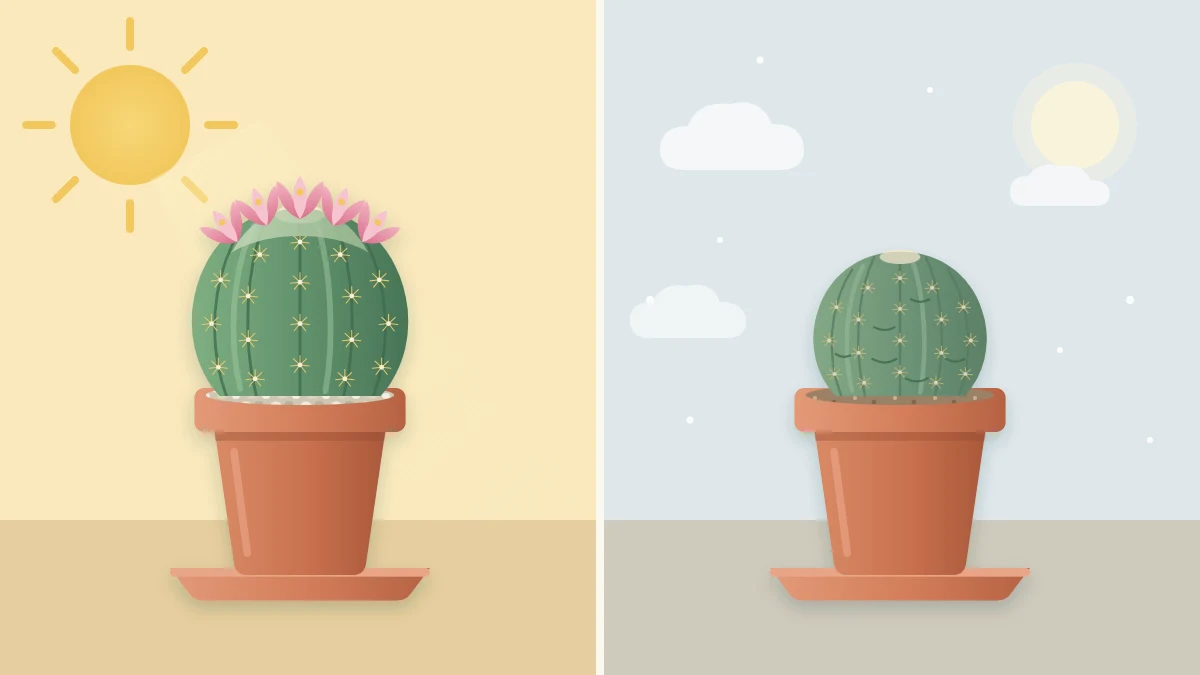
A cactus that grew steadily all summer and then stops can look as though something has gone wrong. Usually nothing has. Cactus dormancy is the plant’s rest period, a slow season that follows the growing one, and for most desert cacti it is a normal and useful part of the year.
Understanding that rhythm explains a lot of care advice that otherwise seems contradictory: why the same plant is watered thoroughly in June and barely at all in January, and why “do nothing” is sometimes the right instruction.
Growth and rest: the basic pattern
Most desert cacti do their growing in the warm, bright months. Long days and strong light give them the energy to add new tissue, spines and, in many kinds, flowers. When days shorten and temperatures fall, growth slows and then pauses. The plant is alive and well; it is simply using very little water and making nothing new.
Dormancy in a cactus is not as clear-cut as a tree dropping its leaves. It is a gradual slowing, driven by light and temperature, and its timing and depth vary between species and between homes. It is also called winter rest.
Why the rest matters
The rest is not just a gap between growing seasons. A cool, bright, mostly dry winter rest is associated with better flowering in many desert cacti, a point made in Clemson Cooperative Extension’s indoor cacti factsheet. Plants kept warm and watered right through winter often grow on weakly and may flower poorly or not at all, though age, species and light also decide whether a cactus blooms.
Signs that a cactus is resting
None of these alone tells you much, but together, in the cooler and darker part of the year, they describe a resting plant:
- No new growth at the crown. No fresh spines, no new wool, no change in size from one month to the next.
- Slight shrinkage. The body may sink a little, ribs may become more pronounced and prickly pear pads may wrinkle as the plant draws on stored water.
- Mix that dries slowly. A plant that is not growing takes up little water, so the pot stays damp far longer than it did in summer.
- Duller color. Some kinds lose a little brightness or take on a reddish or purplish tint in cool, bright conditions.
Shrinkage that is marked, or that comes with soft, dark or mushy tissue, is not ordinary rest. Check the roots and the moisture at depth in that case.
What changes in care during the rest
Care during dormancy is mostly a matter of holding back.
- Much less water. A resting desert cactus is watered only enough to keep it from shriveling badly, and the cooler the room, the less it needs. Cold, wet mix around inactive roots is the main risk of the season.
- No fertilizer. A plant that is not growing cannot use it. Feeding belongs to the growing season, as explained in the guide to fertilizing cactus.
- No repotting, if you can avoid it. Roots disturbed during rest are slow to recover. Wait until growth resumes unless there is an urgent reason such as rot.
- As much light as possible. Resting does not mean the plant can go in a dark corner. Keep it bright.
The practical side of the cold months, including window positions, cold glass and bringing outdoor pots inside, is covered in cactus care in winter.
Good to know
A cool rest does not mean freezing. Most commonly sold cacti are not frost hardy, so treat “cool” as a room that is chilly but well above freezing, roughly 45 to 55°F (7 to 13°C) as a loose guide.
When growth resumes in spring
As days lengthen and warm, the plant wakes up, and the first signs appear at the crown:
- fresh spines, often brighter or more strongly colored than the old ones;
- a patch of brighter green or new wool at the growing point;
- flower buds on plants that are mature enough to bloom.

Ease water back in gradually. Start with a light watering, let the mix dry, and build up over a few waterings to the thorough soak the plant gets in full growth. Roots that have been dry and inactive for weeks need a little time to start working again, and a sudden heavy watering in still-cool conditions can leave them sitting wet. The summer method is described in how to water a cactus.
Why the pattern is blurred indoors
Outdoors or in a greenhouse, falling temperatures and falling light arrive together, and the plant gets a clear signal to stop. A heated home sends a mixed one. The room stays warm, which encourages growth, while the winter light through a window is too weak to support it properly.
The result can be a plant that never fully rests and keeps growing slowly through winter. That growth is often thin, pale and stretched: a narrow neck on a round plant or a tapering tip on a columnar one. It does not fill out later.
If you can, give a desert cactus the cooler of your bright positions for winter, such as an unheated room, and keep it on the dry side so that it is not pushed into growth. If warmth is unavoidable, light becomes the priority.
Forest cacti keep a different rhythm
Christmas, Thanksgiving and Easter cacti are forest cacti, and the pattern above does not describe them. Their year is organized around their bloom: they set buds in response to shortening days and cooler nights, flower in the cooler part of the year and take a quieter spell afterward. They are never kept as dry as a resting desert cactus.
Watch the plant, not the calendar
Dates are only a rough guide. A cactus in a bright, cool sunroom may rest for months, while the same species in a warm apartment may barely pause.
So let the plant tell you. No new growth and slow-drying mix mean it is resting, whatever the month. Fresh spines at the crown mean it is growing again. Adjust water to match what you see, and the seasons take care of themselves.
Frequently asked questions
Is a cactus that stopped growing dead or dormant?
A resting cactus is firm, holds its color reasonably well and simply shows no new growth, perhaps with slight shrinkage. Tissue that is soft, mushy, dark or collapsing suggests a problem instead. If you are unsure, check the mix at depth and the base of the plant, and look for fresh growth at the crown once spring arrives.
Do indoor cacti go dormant?
Many slow down, but the rest is often incomplete indoors because rooms stay warm while winter light is weak. A plant may keep growing slowly and produce thin, pale growth. A cooler bright position and much less water through winter help a desert cactus rest more fully.
When should watering start again after winter?
Go by the plant, not a date. When days are longer and warmer and you see fresh spines or brighter color at the crown, begin with a light watering and let the mix dry. Build up over the next few waterings to the thorough soak the plant receives in full growth.