How to Check Cactus Soil Moisture Before You Water
The surface of a pot dries long before the bottom does. Here are simple ways to check moisture at depth, with a wooden skewer, the weight of the pot, the drainage hole and the plant itself, so you know when the mix is truly dry.
At a glance
What you need
- Plain wooden skewer or chopstick
- Thick leather gloves for plants that overhang the rim
- Notebook or calendar for watering dates
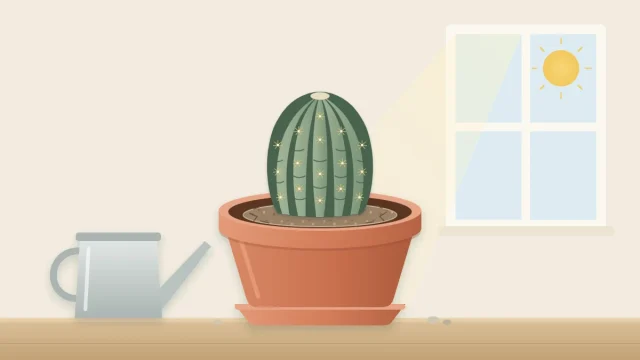
The usual advice for desert cacti is to water only when the soil is dry. The hard part is knowing when that is, because cactus soil moisture is hidden: the top of the pot tells you very little about the bottom.
Checking takes a minute and needs nothing more than a wooden skewer and your hands. Use two or three of the checks below together, and the answer becomes much clearer than any single one can make it.
Why the surface misleads
The top of the mix is open to air and light, so it dries first. Lower down, the mix is shaded, enclosed by the pot wall and packed around the roots, and water settles toward the bottom of a container after watering. A pot can look pale and dusty on top while the lower third is still damp.
A top dressing of gravel hides the surface altogether, and pressing a fingertip into the top inch (2.5 cm) tells you about the top inch only.
The skewer test
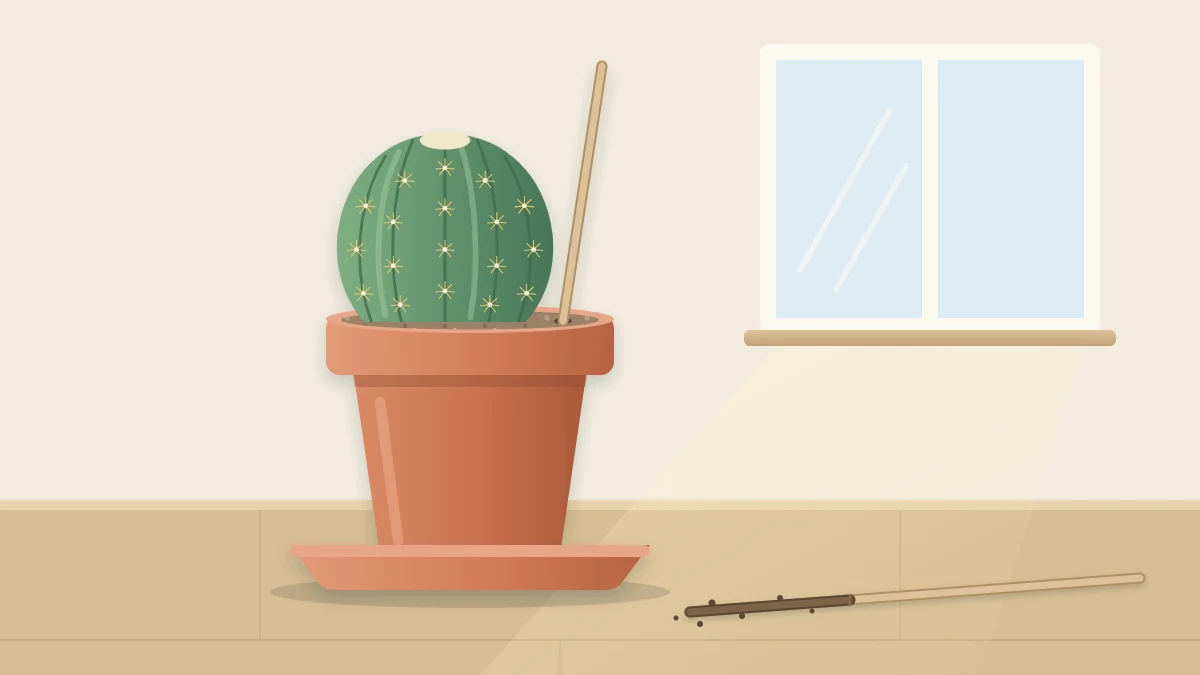
A plain wooden skewer or chopstick works like a cake tester, and it reaches the part of the pot that matters.
- Pick a spot near the edge of the pot, away from the base of the plant, where you are less likely to hit thick roots. If the plant overhangs the rim, wear thick leather gloves.
- Push the skewer straight down, gently, until it touches the bottom. If it meets firm resistance, pull back and try another spot instead of forcing it.
- Leave it in place for a minute or so, giving the wood time to pick up moisture.
- Pull it out and study the lower end. Damp mix leaves the wood darker and cool to the touch, often with particles clinging to it. From dry mix it comes out clean, pale and the same color along its whole length.
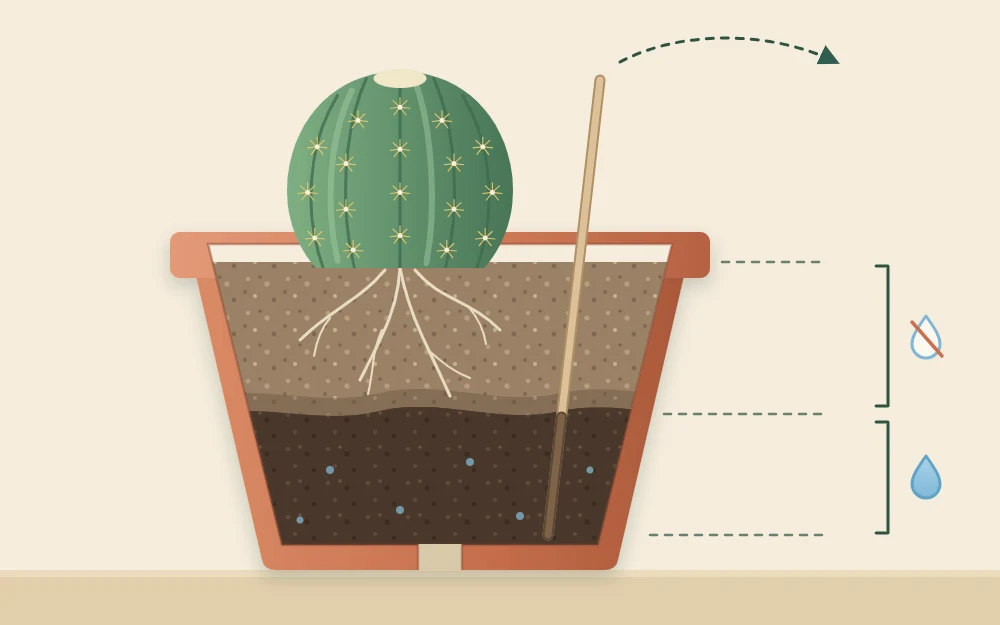
Bare, unvarnished wood reads best. In a very gritty mix little clings to it, so go by the color and by how cool the tip feels against your wrist.
Learn the weight of the pot
Water is heavy, and a small pot of wet mix weighs noticeably more than the same pot dry. Lift the pot just after a thorough watering has drained, then lift it again on a day when the skewer comes out dry. After a few rounds your hands remember both, and a quick lift tells you most of what you need.
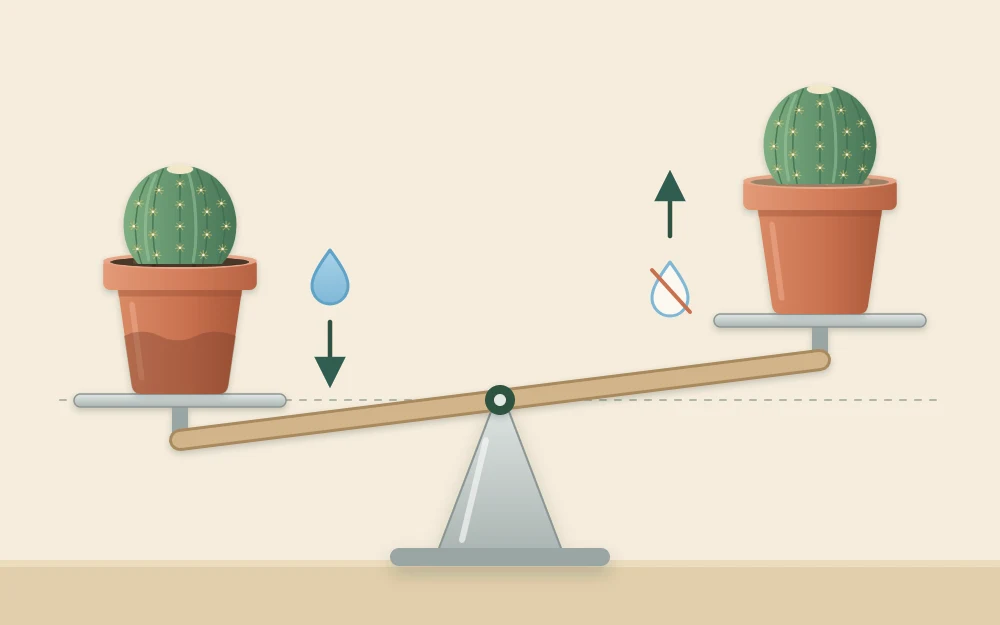
Hold the pot by its sides or base, never by the plant, and keep your fingers below the rim. In a large, heavy container the weight of the pot itself masks the difference, so lean on the skewer there.
Other clues from the pot
- The drainage hole. Tilt the pot and look at the mix showing through the hole. Dark and cool means it is still damp at the bottom; pale and crumbly means that part has dried. This is usually the last part of the pot to dry, which makes it a useful check.
- Unglazed terracotta. The clay absorbs water, so a damp pot looks darker and feels cool, then lightens as it dries. A dark band around the lower part suggests wet mix inside. Glazed ceramic and plastic give no such hint.
- A gap at the edge. Some mixes, especially those with a lot of peat, shrink away from the pot wall when they become very dry.
What the plant tells you
A desert cactus stores water in its stem, and its ribs or tubercles work like the folds of an accordion. When the plant is full, the body is plump and the grooves between the ribs are shallow. As it draws on its reserves, the ribs narrow and pull in slightly, and the body may feel a little less firm.
Treat this as a slow, supporting signal. A plant with damaged roots also shrinks, because it cannot take up water even from wet mix. Confirm what the plant suggests by checking the soil, not the other way around. The guide to an underwatered cactus explains how to tell thirst from root trouble.
Moisture meters: one clue only
Most inexpensive meters with a metal probe do not measure water directly. They respond to how readily the damp mix around the probe carries a tiny electrical current and turn that into a position on a dial.
In fine, even potting soil that can roughly follow moisture. In a gritty mix the probe touches air gaps and chunks of pumice, contact is patchy, and the dial may show dry while the mix is still damp. Dissolved fertilizer salts can also push a reading higher. If you own a meter, test several spots and compare the result with a skewer before you trust it.
What “dry all the way through” means
For a desert cactus it means that the skewer comes out dry from the bottom of the pot, the pot is back to its dry weight and the mix at the drainage hole is pale. The surface alone does not count.
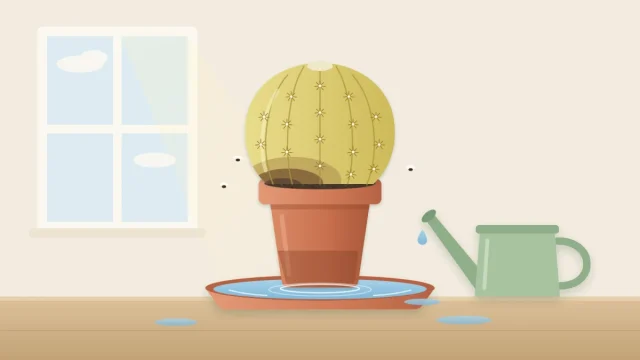
The reason is at the roots. Desert cactus roots need air as much as water and are suited to a thorough wetting followed by a dry spell. Roots that sit in constantly damp mix are prone to rot, and waiting for the mix to dry through is the simplest safeguard. Forest cacti such as Christmas cactus are the exception: they are watered once the top of the mix has dried and should not stay bone dry for long.
How long drying takes varies with the pot, the mix, light, temperature, humidity and season. As a rough illustration, a small terracotta pot in a hot, bright window might dry within a week or two, while the same plant in a cool, dim room can stay damp for a month or more. If a pot never seems to dry, the mix is probably too dense, and the guide to cactus soil explains how to open it up.
Tip
Note the date you water and the date the skewer first comes out dry. After a few rounds you will know roughly how long your own pots take in each season. Use that as a reminder of when to check, never as a timetable for watering.
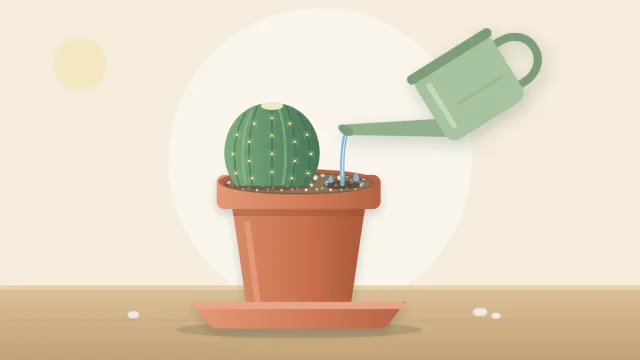
Once the checks agree that the pot is dry, the next step is a thorough watering, described in how to water a cactus.
Frequently asked questions
How deep should cactus soil be dry before watering?
For desert cacti, all the way to the bottom of the pot. Push a wooden skewer down until it touches the base, leave it for a minute and check the lower end. If it comes out darker, cool or with damp particles clinging to it, wait and test again in a few days.
Are moisture meters accurate for cactus soil?
Inexpensive probe meters are unreliable in gritty mixes. They react to how well the damp mix conducts a small current, and coarse particles and air gaps give the probe poor contact, so a pot can read dry while it is still damp. Treat the reading as one clue and confirm it with a skewer.
Can I tell if a cactus needs water by touching the top of the soil?
Not reliably. The surface dries first because it is exposed to air, while the lower part of the pot can stay damp for much longer. A finger test covers only the top inch or so. Check at depth with a skewer or learn the dry weight of the pot instead.