Overwatered Cactus: Signs, Causes and What to Do
A swollen, pale or soft cactus may have had too much water, but no single sign proves it. Learn which checks confirm it, what keeps a pot wet for too long, and the steps to take before and after you look at the roots.
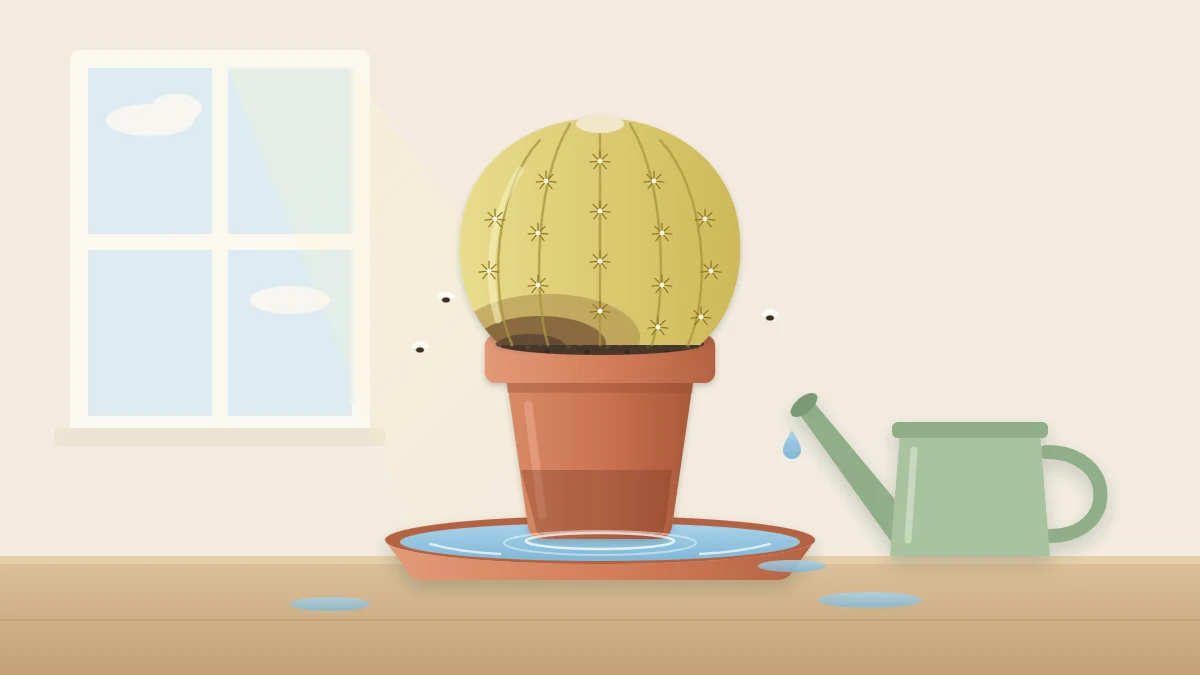
An overwatered cactus rarely looks alarming at first. It may seem fuller than usual, a little pale, perhaps faintly yellow, and then one day a patch near the soil feels soft.
Too much water is the most common problem with indoor cacti, according to Clemson Cooperative Extension’s indoor cacti factsheet, so it is a reasonable thing to suspect. It stays a suspicion, though, until you have checked the soil and, if needed, the roots.
Signs commonly associated with too much water
- A body that looks swollen or bloated, with the ribs stretched almost flat
- Pale or yellowing color, often spreading from the base upward
- Soft or translucent, water-soaked patches that often start near the soil line
- Skin that splits after a sudden heavy watering that follows a long dry spell
- Mix that stays dark and wet long after watering
- A sour or musty smell from the pot
- Small dark flies, called fungus gnats, around mix that stays moist

Why no single sign settles it
Each of these signs has other possible causes. Yellowing can follow low light, scorch or exhausted soil. A soft area can come from cold damage, and a thirsty plant can feel soft too, in a leathery way. A plant whose roots have rotted may even look shriveled, because it can no longer take up the water around it.
What links the signs to overwatering is the soil. Find out whether the mix is still wet at depth, using the checks in the guide to cactus soil moisture. If it has been dry to the bottom for some time, excess water is unlikely to be what is troubling the plant now, and the article on a cactus turning soft sorts through the other possibilities.
Causes beyond watering too often
Overwatering is less about how much you pour than about how long the roots stay wet. Several things keep a pot wet for too long, even when you water sparingly:
- Dense soil. Mixes rich in peat or fine particles hold water and leave little air around the roots.
- No way out. A pot without a drainage hole, or a saucer or outer pot left full. The Clemson factsheet notes that pots should never stand in water.
- An oversized pot. A large volume of mix around a small root ball dries slowly.
- Low light. A plant in a dim spot uses little water.
- Cool weather. Evaporation slows and so does growth.
- Watering during rest. A desert cactus resting through a cool, dim winter takes up very little.
Forest cacti such as Christmas cactus like more moisture than desert kinds, yet they suffer in soggy mix as well.
What to do first
- Stop watering, and empty the saucer or outer pot.
- Move the plant to brighter, airier conditions, where the mix dries faster. Avoid a sudden move into harsh direct sun, since a stressed plant scorches easily.
- Lift off any top dressing, opening the surface of the mix to the air.
- Test the base and body for firmness with a padded tool or the back of a spoon, not with bare fingers.
- Decide whether to look further. If the plant is firm everywhere and the mix is merely damp, let it dry all the way through and wait. If the mix is soggy, smells sour or the plant has a soft patch, slide it out of the pot.
Sliding the plant out to look
Protect yourself before you touch the plant. Wear thick leather gloves, wrap a folded newspaper strip around the body as a sling, or grip a small plant with padded tongs. Add eye protection for a tall plant. Thin fabric gloves do not stop spines.
Tip the pot on its side and ease the pot away from the root ball. Healthy roots are firm and pale or tan. Roots that are dark, soft and sour-smelling, or that shed their outer layer when touched, point to rot, and so does a dark, soft base on the stem. If that is what you find, continue with the guide to cactus root rot.
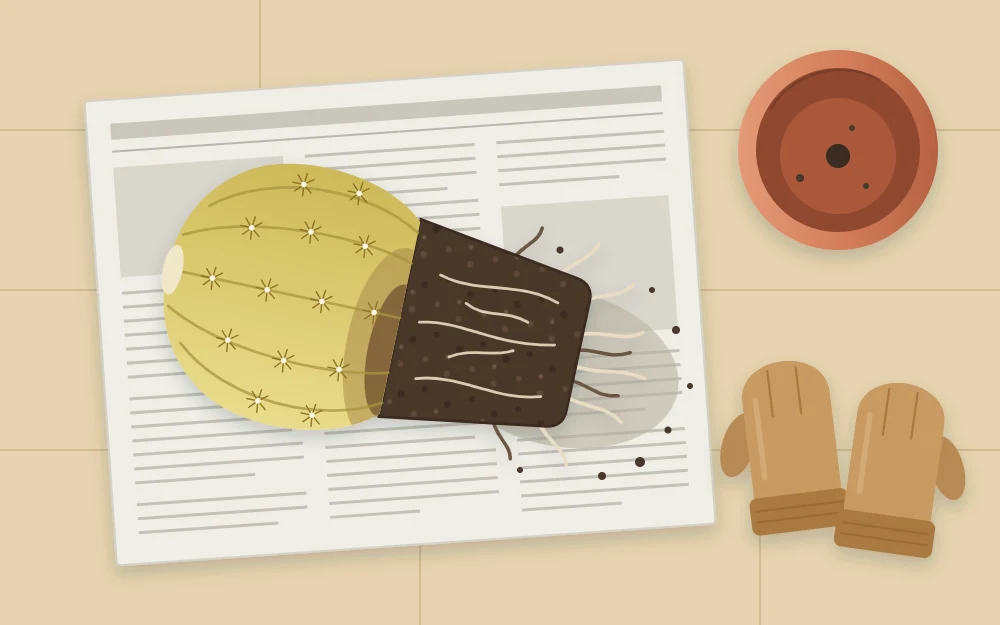
If the roots look sound but the mix is soaked, leaving the root ball out of the pot on a sheet of paper in bright shade for a day or two can help it dry faster than it would in the pot.
When to repot into dry mix
Repotting makes sense when the mix is dense and slow to dry, when the pot has no hole or is far too large, or when you have had to remove damaged roots. Use fresh, dry, gritty mix and a pot with a drainage hole that is only slightly wider than the root ball.
Then wait. Do not water straight away: give the plant at least several days, and longer if roots were cut or broken, allowing damaged roots to dry and seal. Hold off on fertilizer too.
If the roots are sound and the mix drains well, repotting is not needed. Return the plant to its pot and change the habit instead: water only after the mix has dried to the bottom.
Tip
Judge recovery by firmness and by new growth at the crown, not by color. Yellowed skin often stays pale long after the roots have recovered, and a split that has dried into a firm scar is permanent but does no further harm.
When a plant cannot be saved
Some plants are past help by the time the damage shows, and it is better to know that than to keep nursing them. Recovery is unlikely when the base is soft and dark all the way around, when the softness keeps climbing the stem, or when the inside of the stem is discolored well up the plant. A plant that has collapsed or is leaking fluid will not come back.
A firm plant that has lost only some of its roots often has a chance, but it is a slow one. Expect weeks or months without visible change while new roots form, and resist the urge to help with extra water.
When a plant does die from rot, throw the old mix away and scrub the pot before you use it again.
Frequently asked questions
Can an overwatered cactus recover?
Often, if the stem is still firm and at least some roots are healthy. Stop watering, let the mix dry completely and look at the roots if the soil is soggy or a soft patch appears. Plants with a soft, dark base all the way around or discoloration well up the stem are unlikely to recover.
How long does it take for an overwatered cactus to dry out?
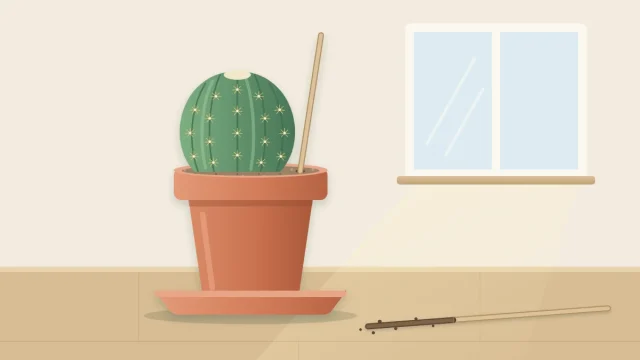
It depends on the pot, the mix, light, temperature and humidity. A small terracotta pot of gritty mix in a bright, warm spot may dry within days, while a large glazed pot of dense soil in a cool room can stay wet for weeks. Check at depth with a wooden skewer instead of guessing.
Should I repot an overwatered cactus right away?
Not in every case. If the plant is firm and the mix is only damp, letting it dry out is enough. Repot into fresh, dry, gritty mix when the soil is dense or soggy, the pot lacks a drainage hole or roots have rotted. Wear thick gloves, and wait several days before watering.