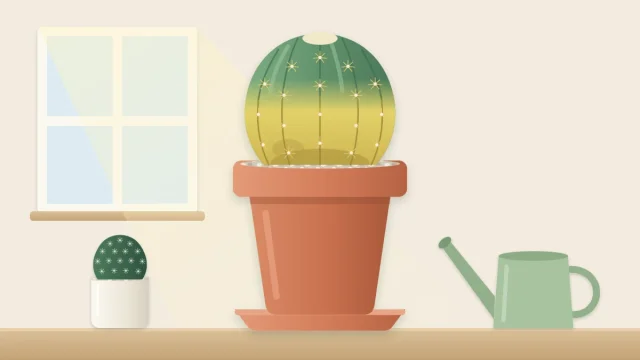
Cactus Turning Soft or Mushy: Possible Causes and Checks
Sort a soft cactus by how it feels and where the softness is, then check soil, roots and recent temperatures to tell rot, thirst, cold damage and scorch apart.
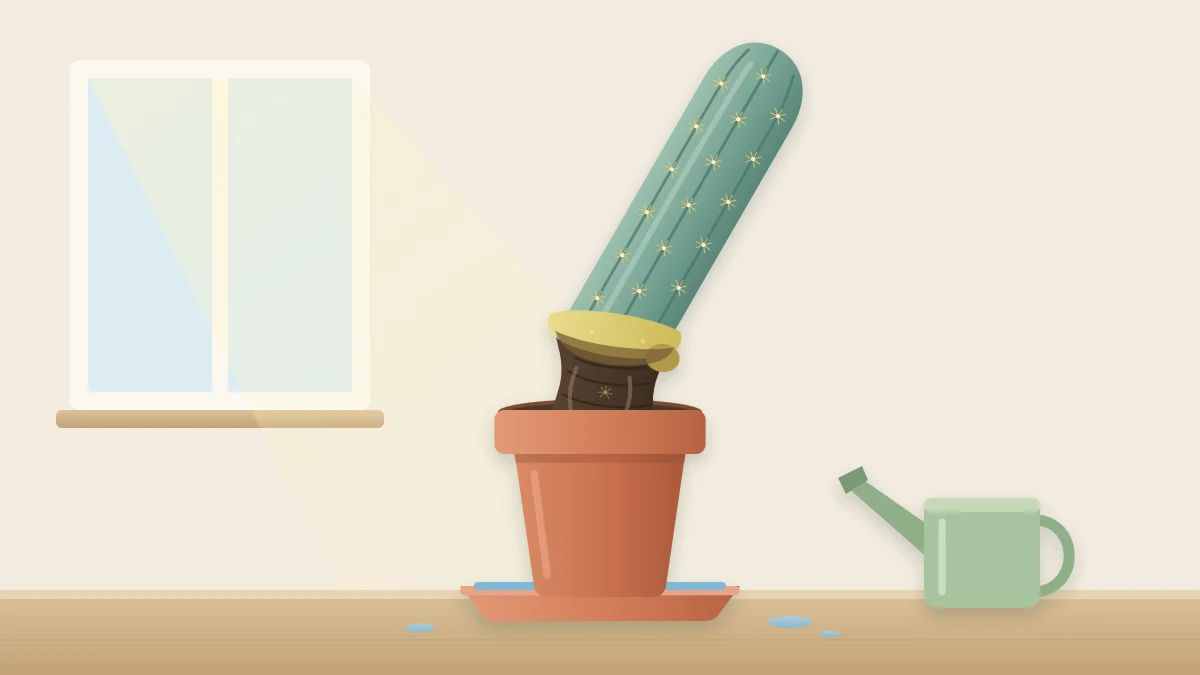
A healthy desert cactus is firm, with skin that barely gives under pressure. So a cactus turning soft gets your attention fast, and the first instinct, more water or less water, is a guess until you know what kind of softness you are dealing with.
Softness has several possible causes, and they call for different responses. Where the soft area is, how it feels and what happened in the weeks before will usually narrow things down.
Test firmness without using your fingers
Pressing a spiny plant with bare fingers is a good way to get hurt, and squeezing can bruise tissue that was sound. Use a padded tool instead: the back of a spoon, the eraser end of a pencil or a pair of tongs with padded tips.
Press gently in several places, starting with an area that looks healthy. Wear thick leather gloves if you need to steady or tilt the pot, and hold the body with a folded newspaper sling, never bare hands. Thin fabric gloves do not stop spines.
Sort the softness by feel and place
Most cases fit one of five patterns:
- Soft, wet and darkening at the base or spreading upward.
- Soft but leathery and wrinkled across the whole plant.
- Water-soaked, then blackened tissue that appears after a cold night.
- A soft pale patch on the side facing the sun.
- A soft spot around a wound or scar.

These can overlap, so treat the pattern as a pointer to what to check, not as the answer.
Soft, wet and dark from the base
Tissue that is mushy, darker than the rest and damp, particularly at the soil line, is often rot linked to mix that stayed wet too long. It commonly goes with soil that is still moist days after watering, a sour smell, a plant that rocks in its pot, and sometimes a yellowish or translucent look above the soft zone.
Check the mix at depth with a wooden skewer and look at where the pot sits: a saucer or outer pot holding water is a frequent part of the story. Clemson Cooperative Extension’s indoor cacti factsheet names too much water as the most common problem with these plants. The guide to an overwatered cactus covers the other signs and the conditions behind them.
If the mix is wet, stop watering and slide the plant out to look at the roots and the base. Growers commonly remove the wet soil and cut away dark, soft tissue with a clean blade until only firm, clean tissue remains, then let the plant dry before repotting in dry gritty mix. The steps, and their limits, are in the guide to cactus root rot.
Soft but leathery and wrinkled all over
This softness feels different. The skin is flexible and slightly slack, like a balloon that has lost some air, but it is dry and the color is normal or a little dull. The ribs are drawn in, and there is no smell and no dark patch.
Two causes are common, and they need opposite treatment:
- Thirst. The mix is dry to the bottom, the pot is light and the roots are intact. A thorough watering usually brings the plant back over days to weeks. See the guide to an underwatered cactus for how to rehydrate without overcorrecting.
- Lost roots. The mix is damp, yet the plant is still shrunken. Roots that have rotted or dried out cannot take up water, so the plant shrivels while sitting in moisture. More water makes this worse. Look at the roots before doing anything else.
Season matters too. A desert cactus kept cool and nearly dry through its winter rest often shrinks and softens slightly, then fills out in spring.
Soft and dark after a cold night
Cold damage has a recognizable sequence. The affected tissue first looks water-soaked or glassy, then turns brown or black and collapses over the following days. It tends to show at the tips, on thin growth and on the side nearest a cold window or an open door, and it may not appear until several days after the cold spell.
Think back over recent temperatures: a plant left outdoors on a frosty night, or pressed against freezing glass, is the usual history.
Move the plant somewhere bright, dry and well above freezing, and do not water. Then wait. Limited damage often dries into a firm scar and the plant grows on. If the damaged area stays wet and keeps spreading, cutting back to clean tissue is what growers usually try. The guide to cactus care in winter explains how to keep plants clear of cold glass.
A soft patch on the sunny side or around a wound
Scorch from a sudden move into strong sun usually shows as a bleached or tan patch that stays firm. Severe scorch can leave the patch sunken and soft for a while before it dries into a corky scar. The clues are position, on the side facing the light, and timing, soon after a move or a change of season. Give the plant some shade and keep the patch dry.
A soft spot around a nick, a crack or a pest-damaged area is a wound that has not sealed. A healthy cactus normally closes an injury with a dry, hard callus. In damp, still air the tissue may stay soft instead.
Tip
For any small soft patch, keep water off it, give the plant bright light and moving air, and check it every few days. A patch that shrinks and hardens is healing over. One that grows, darkens or turns wet needs a closer look at the roots and base.
When recovery is unlikely
Some plants cannot be saved, and it helps to recognize that early. Recovery is unlikely when soft, dark tissue has climbed well up the stem, when the inside of the stem is discolored far above the visible damage, or when the plant has collapsed and is leaking fluid.
Keep a rotting plant away from the others and discard the old mix instead of reusing it.
Good to know
This guide is about desert cacti. Christmas, Thanksgiving and Easter cacti are forest cacti with thin, flat segments that go limp for their own reasons, including mix that is too dry as well as too wet, so judge those plants by their own care needs.
Frequently asked questions
Can a soft cactus become firm again?
It depends on the cause. A plant that is soft and wrinkled from thirst usually plumps up over days to weeks once it is watered thoroughly and its roots are sound. Tissue that has rotted or been killed by cold does not recover, though the rest of the plant sometimes can.
Why is a cactus soft at the bottom?
Softness at the base is often associated with rot in mix that stayed wet, but check before deciding. Firm, dry, brown skin at the base of an older plant is corking, which is normal. Test with a padded tool: rot is soft and usually damp, corking is hard and dry.
Should I water a cactus that feels soft?
Only after checking the mix. If a skewer pushed to the bottom of the pot comes out dry and the plant is wrinkled, a thorough watering is reasonable. If the mix is damp and the plant is still soft, more water is likely to make matters worse, so look at the roots first.