Common Cactus Problems: A Symptom-by-Symptom Guide
A symptom table with possible causes and first checks, plus a six-step routine for working out what a struggling cactus is telling you before you change anything.
When a cactus changes, the change is usually slow, and by the time you notice it the cause may be weeks old. That makes guessing tempting, and guesses are often wrong.
This guide to common cactus problems is a starting point: a table of symptoms with possible causes and a first check, followed by a short routine that works for almost any worry. One symptom rarely has one cause, so treat the table as a list of things to rule out, not as a verdict.
Symptoms at a glance
| Symptom | Common possible causes | What to check first |
|---|---|---|
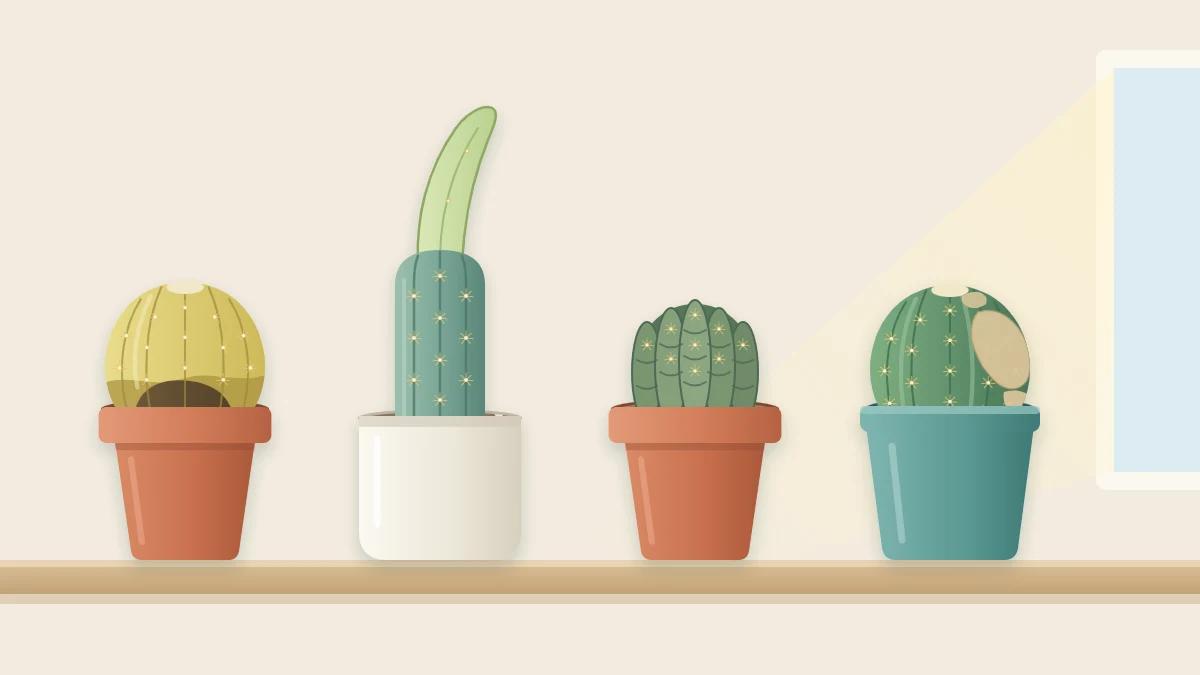
| Soft or mushy spots | Rot linked to wet mix, cold damage, scorch, a wound | Moisture at depth, the base and roots, recent cold nights |
| Yellowing | Excess water or root trouble, low light, scorch, exhausted mix | Whether the tissue is firm, and where the yellow sits |
| Brown corky base | Corking with age, old scars; rot if it is soft | Firm and dry, or soft and wet |
| Pale tan patches | Sunburn after a sudden move, old injuries | Which side faces the light, any recent move |
| Thin stretched growth | Too little light | Light at the exact spot where the plant stands |
| Shriveling | Thirst, lost roots, normal winter shrinkage | Mix at depth, then the roots |
| Leaning | Reaching for light, loose roots, a soft base | Direction of the lean, wobble, firmness at the base |
| White fluff | Mealybugs, or natural wool on areoles and the crown | Whether it sits in clusters and smears when touched |
| Small bumps | Scale insects, corky scars, ordinary areoles | Whether a bump lifts off with a toothpick |
| Fine webbing | Spider mites, or an ordinary house spider | Dull, rusty or speckled skin near the tip |
| No growth | Winter rest, low light, root trouble, a slow species | Season, light, then roots |
| No flowers | A young plant, too little light, no cool winter rest | Age of the plant, light, how it spent winter |
A six-step check for any symptom
Before you change anything, gather the facts, moving from the least disturbing check to the most.
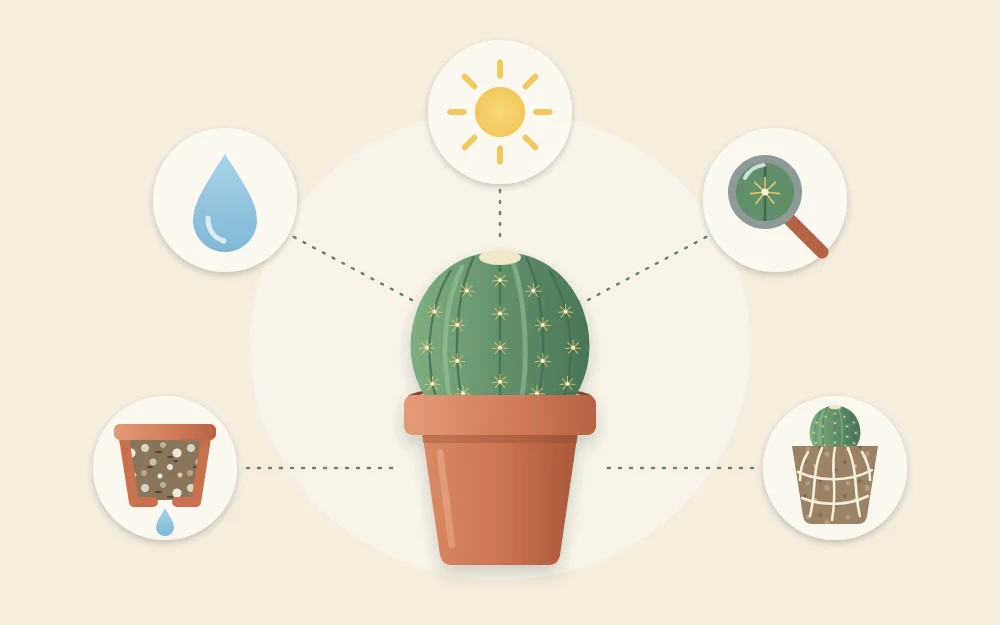
- Look at the light. Stand where the plant stands. Does it get direct sun for part of the day, or only brightness from across the room?
- Check the mix at depth. The surface dries first. Push a wooden skewer to the bottom of the pot and see whether it comes out damp, or lift the pot and judge its weight.
- Check the drainage hole. Make sure there is one, that it is not blocked, and that the pot is not standing in water in a saucer or outer pot.
- Look closely at the skin. Use a magnifier between the ribs, around the areoles, at the crown and at the soil line. Note color, texture and anything that moves or wipes off.
- Slide the plant out and look at the roots. Do this only if the earlier steps leave the question open. Let the mix dry first, wear thick leather gloves and lift the plant with a folded newspaper sling or tongs.
- Recall recent changes. A move, a repot, a new watering habit, a cold night by the window or the turn of the season often explains what the plant is showing.
Soft, yellow or brown tissue
Soft, wet, darkening tissue near the soil line is often associated with rot in mix that stayed wet. A plant that is soft but leathery and wrinkled all over is more commonly thirsty or has lost its roots. Those two need opposite responses, which is why the soil check comes before any watering. The guide to a cactus turning soft or mushy sorts the cases by feel and location.
Color follows a similar logic. Yellowing with soft tissue points in a different direction from pale new growth at the top, bleached patches on the sunny side, or a reddish tint in strong sun or cold. See the guide to a cactus turning yellow or brown for each pattern.
Stretching, leaning and shriveling
A globe that grows a narrow, pale, pointed top, or a column that thins like a bottleneck, is usually reacting to low light. Growth of this kind does not fill out later, so the fix is about the next growth, not the old. The guide to an etiolated cactus covers the options.
Leaning toward a window is commonly part of the same picture. A lean with a wobble suggests the roots are no longer holding, so check the base and the root ball. Shriveling can mean dry mix, but a plant with damaged roots shrivels in wet mix as well, because it cannot drink.
Fluff, bumps and webbing
Not every white tuft is a pest. Many cacti have woolly areoles, and some have a woolly crown. Natural wool is regular and anchored at the areoles. Mealybug clusters are irregular, tucked into creases, and waxy when pressed with a toothpick.
Small tan or brown bumps that lift off may be scale insects, while bumps that are part of the skin are more likely scars. Fine webbing with a dull or rusty surface near the growing tip is one possible sign of spider mites. Set a suspect plant apart from the others, then use the guide to cactus pests to identify what you have found.
Changes that are normal
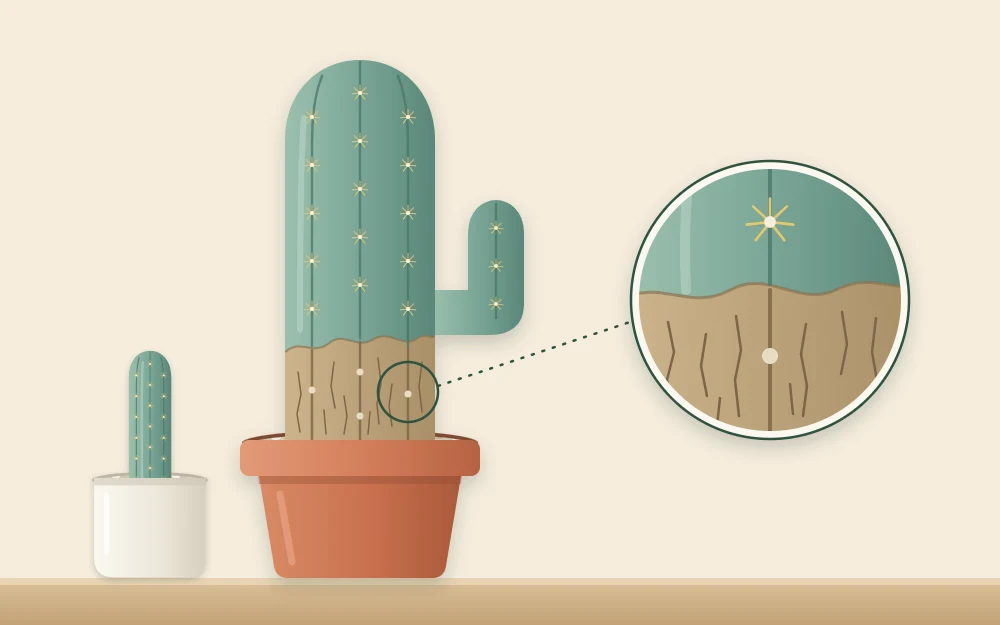
Some things that look alarming are part of ordinary life for a cactus. Corking is the main one: firm, dry, tan-brown, bark-like skin that starts at the base of an older plant and creeps slowly upward. It supports the stem and is not a disease. The test is touch, using a padded tool instead of a finger: corking is hard and dry, while rot is soft and often damp.
A pause in growth during winter, old scars from past knocks, and a young plant that has not flowered yet are also normal.
What not to do
Avoid answering a symptom with water, fertilizer, a new pot and a new window all at once. If the plant then improves or worsens, you will not know why. Change one thing, and give it a few weeks, since cacti respond slowly.
Good to know
Most of this guide describes desert cacti. Christmas, Thanksgiving and Easter cacti are forest cacti: they want filtered light and more regular moisture, so limp or reddened segments on those plants have their own set of causes.
Frequently asked questions
How do I know if a cactus is dying?
Look for change that keeps spreading: soft, dark, wet tissue moving up from the base, a plant that collapses or leans from a mushy point, or a sour smell from the mix. A firm plant that is merely discolored, scarred or not growing is often stable and worth a calm check of light, soil and roots.
Why is a cactus not growing?
Often because it is resting. Many desert cacti pause in the cooler, darker months and some species are slow at any time. If the plant is firm and it is the growing season, low light is a common reason, followed by roots that are damaged or have filled the pot.
Should I water a cactus that looks unwell?
Not before checking the mix at depth. A shriveled or soft cactus can be thirsty, but it can also have lost its roots in wet mix, and more water makes that worse. Push a skewer to the bottom of the pot first; water only if it comes out dry.