A Simple Cactus Care Routine: Weekly, Monthly and Seasonal Checks
A practical routine built on looking, not on doing: a quick weekly glance, a soil check before any watering, a closer monthly look and a review at each change of season.
Cacti do badly on a timetable and well on attention. That sounds like more work, but it is less: a good cactus care routine is a short series of looks, spaced out through the week, the month and the year, with very little actual doing in between.
The idea to hold on to is that the routine tells you when to look, never when to water. Watering, repotting and moving a plant all happen because of what you see, not because a date has come around.
Why a checking routine beats a watering schedule
How fast a pot dries depends on the species, the mix, the pot, the light, the temperature, the humidity and the season. A fixed watering day ignores all of that, which is how plants end up sitting in wet mix.
A fixed looking day has no such risk. Looking costs the plant nothing, and it is how you catch a lean, a pest or a soft patch while it is still small.
The weekly glance
Once a week or so, spend a minute per plant. Do not touch anything. You are checking five things by eye:
- Light. Is the plant still getting what it did last month? Seasons shift the sun, and curtains, screens and neighboring plants move.
- Lean. Is the body tilting toward the window, or the crown narrowing?
- Color. Is the green even, or is there new yellowing, paling, reddening or browning?
- Firmness. Do the ribs look full, or sunken and wrinkled? Does any area look soft, dark or translucent?
- Anything new on the skin. White fluff, small bumps, webbing, spots or scars that were not there before.
Most weeks the answer is “no change”, and you are done. A weekly glance does not mean watering weekly.
The soil check before any watering
If the plant looks as though it might be ready for water, check the mix before reaching for the can. Push a wooden skewer down to the bottom of the pot and see whether it comes out clean and dry, or lift the pot and judge its weight against how it feels when freshly watered. The mix needs to be dry all the way down, not just at the surface. The guide to checking cactus soil moisture walks through each method.
Dry all the way through and in active growth: water thoroughly and empty the saucer. Still damp anywhere: leave it and look again in a few days.
Tip
Write down the date each time you water a pot. After a season you will know roughly how long your own pots take to dry in your own rooms, which is far more useful than any general rule.
The monthly closer look
About once a month, take a few minutes more with each plant.
- Rotate the pot a quarter turn so that growth stays even. Skip this for a plant that is in bud, and when a plant stands in strong direct sun, turn it gradually so that a shaded side is not exposed all at once.
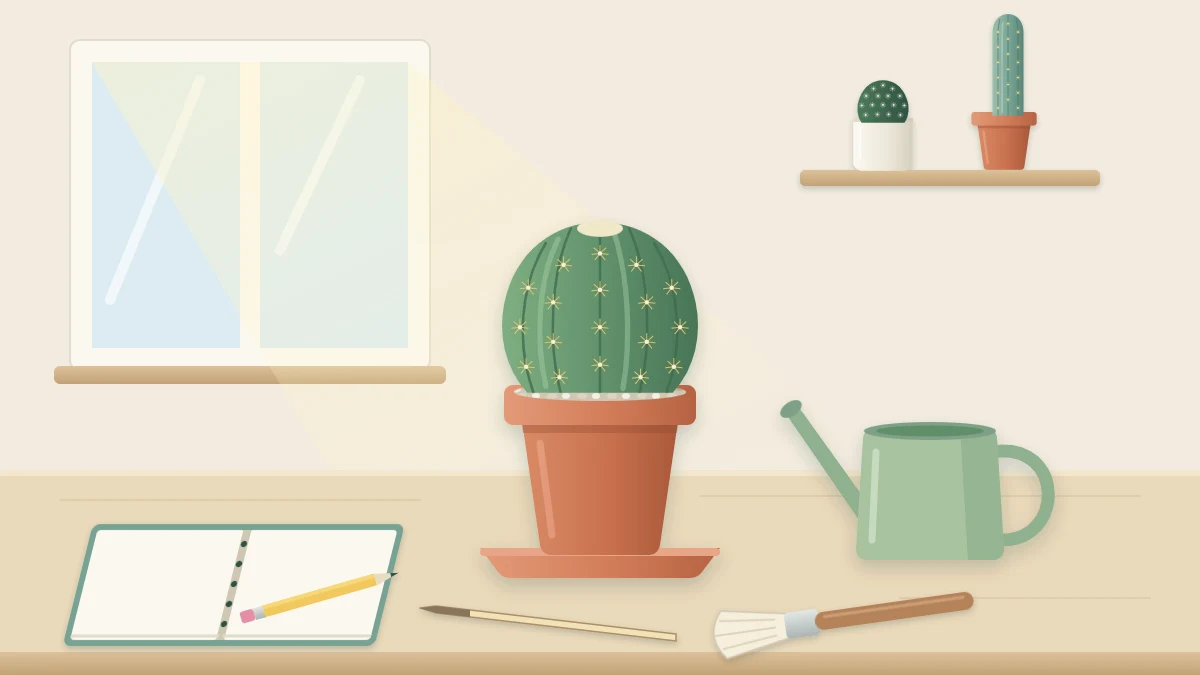
- Dust it with a soft brush. Dust dulls the skin and hides problems. A clean, soft paintbrush or makeup brush reaches between spines without your fingers going near them.
- Look between the ribs and around the areoles. This is where insects hide. A small magnifying glass helps. If you find something, the guide to cactus pests will help you identify it.
- Check the drainage hole. Roots growing out of it, or a hole blocked with compacted mix, are both worth knowing about.
- Wipe the pot and saucer. Clear away mineral crust, fallen debris and any standing water.

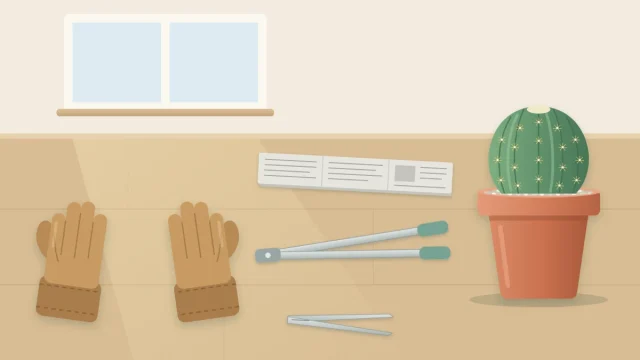
Hold the pot, not the plant, while you do all this. If you need to steady or tilt a spiny cactus, use thick leather gloves or a folded newspaper sling.
The routine at a glance
| Check | How often to look | What you are looking for |
|---|---|---|
| Quick glance | About weekly | Changes in light, lean, color, firmness and anything new on the skin |
| Soil moisture | Only when the plant may be ready for water | Mix dry to the bottom of the pot; a light pot |
| Closer look | About monthly | Even growth, dust, pests between ribs, the drainage hole, crust on the pot |
| Seasonal review | At each change of season | Whether water, light and position still suit the time of year |
The seasonal review
Four times a year, step back and ask whether the plant’s care still matches the season. The notes below are for desert cacti; Christmas, Thanksgiving and Easter cacti are forest cacti with a different rhythm built around their bloom.
Spring
As days lengthen and you see fresh growth at the crown, resume watering gradually, starting with a modest drink and building up to thorough soaks. This is the usual time to repot a plant that needs it. If a plant is moving to a brighter spot or outdoors, acclimate it to the stronger light in stages.
Summer
Growth is at its peak and pots dry fastest, so your soil checks will come up dry sooner. Watch for heat building up behind glass, where a closed, sunny window can scorch even a sun-loving plant.
Fall
Growth slows as light fades and nights cool. Ease off the water as the mix takes longer to dry, and stop feeding. Bring in any pots that spent the summer outdoors before the first frost.
Winter
Most desert cacti rest. Give them a cool, bright position and keep them mostly dry, watering only enough to prevent marked shriveling. How this rest works, and how to tell when it is ending, is explained in the guide to cactus dormancy.

When a check turns something up
The point of looking regularly is that you notice change early, and early is when most problems are easiest to deal with. When something does look different, resist the urge to respond at once with water, fertilizer or a new pot. One symptom rarely has one cause.
Instead, gather the facts first: how wet the mix is at depth, what the light has been like, what the recent temperatures were and whether anything changed in the last few weeks. Then compare what you see against the overview of common cactus problems before deciding what, if anything, to do.
Frequently asked questions
Should I water a cactus on the same day each week?
A fixed watering day is not a good guide, because how fast a pot dries depends on the species, mix, pot, light, temperature, humidity and season. Use a regular day for looking instead. Water only when the mix is dry to the bottom of the pot and the plant is in active growth.
How do I clean dust off a cactus?
Use a clean, soft brush, such as a small paintbrush, and sweep gently downward between the ribs and spines while holding the pot, not the plant. Avoid wiping with a cloth, which snags on spines. If you must steady a spiny plant, use thick leather gloves or a folded newspaper sling.
Why rotate a cactus pot?
Indoor light usually comes from one side, so a plant left in one position tends to grow toward the window and lean. A quarter turn at each monthly check keeps growth more even. Turn gradually when the plant sits in strong direct sun, since the shaded side can scorch if exposed suddenly.