Cactus Care for Beginners: A Simple Starting Guide
New to cacti? Learn how the plant is built, the four conditions that decide most outcomes, and what to do in the first two weeks with a new plant.
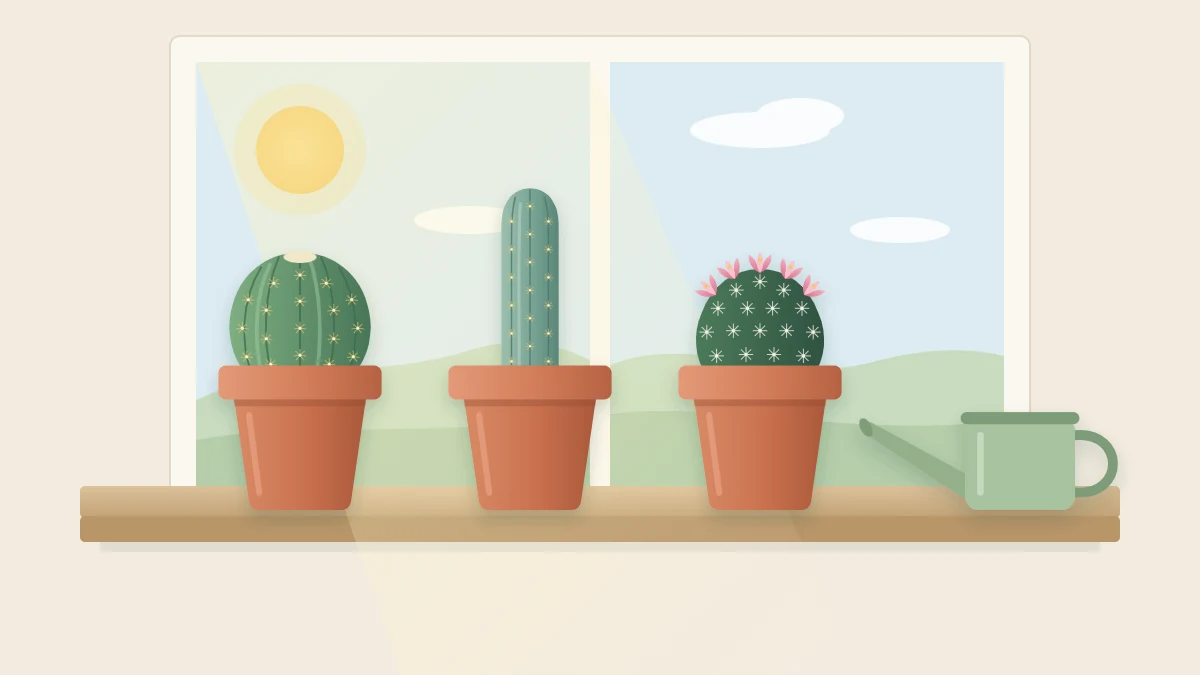
A cactus is one of the easier houseplants to keep, but only once you stop treating it like the leafy plants beside it. Most trouble with a first cactus comes from kindness: a little too much water, a pretty pot that cannot drain, a spot that is comfortable for people and far too dim for a desert plant.
This guide to cactus care for beginners covers what matters most in the first months: how the plant is built, the four conditions that decide most outcomes, and what to do in the first two weeks.
What makes a cactus a cactus
A cactus is a plant that stores water in its stem. Most kinds have no leaves at all. The thick green body does the work that leaves do on other plants, and a waxy skin slows the loss of moisture.
Three features are worth knowing by name, because the rest of the care advice refers to them:
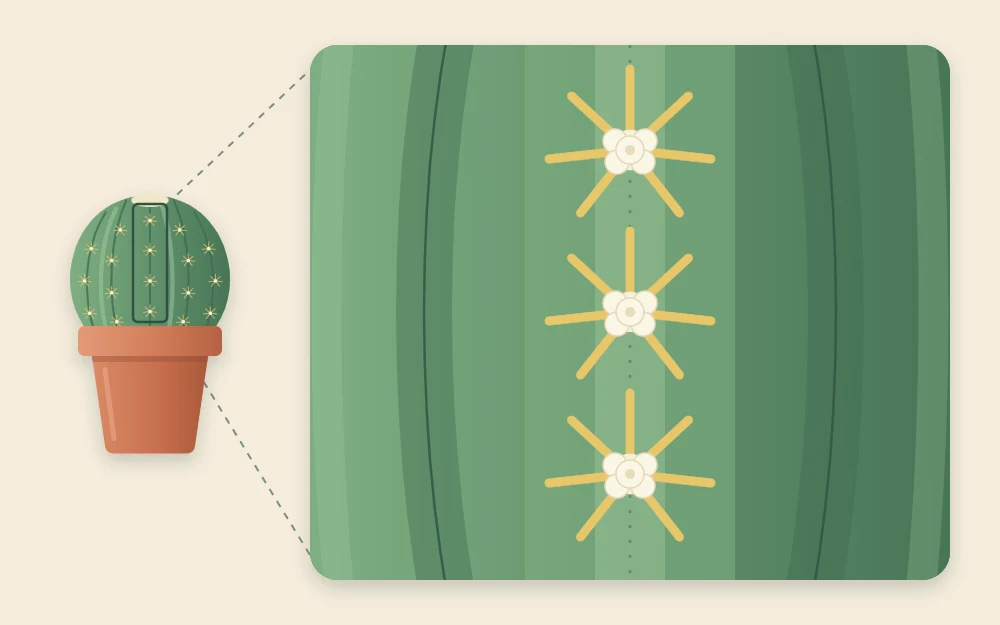
- Ribs or tubercles. The ridges on a barrel or columnar cactus are ribs. The separate bumps on a pincushion type are tubercles. Both let the body swell after a good drink and draw in again as the stored water is used, a little like an accordion.
- Areoles. These are the small, often woolly cushions dotted along the ribs or on the tips of the tubercles. Spines, flowers and new branches all grow from them. Areoles are the feature that sets cacti apart from spiny look-alikes.
- Spines. They shade the skin, protect the plant and, on some species, hook into anything that brushes past.
This build explains the care. A plant designed to take up water quickly and then live on its reserves does not need constant moisture, and its roots suffer when they sit in wet, airless soil.
Desert cacti and forest cacti
Most cacti sold as houseplants are desert cacti: barrels, columns, pincushions and prickly pears from dry, sunny places. Nearly everything on this page is about them.
A smaller group, the forest cacti, includes the Christmas, Thanksgiving and Easter cacti. In nature they grow on trees in humid forests, so they prefer bright filtered light and more regular moisture than their desert relatives. If your plant has flat, jointed segments and no stout spines, look up care for that plant specifically, because several of the rules below would be wrong for it.
The four things that decide most outcomes
Get these four right and small slips elsewhere rarely matter.
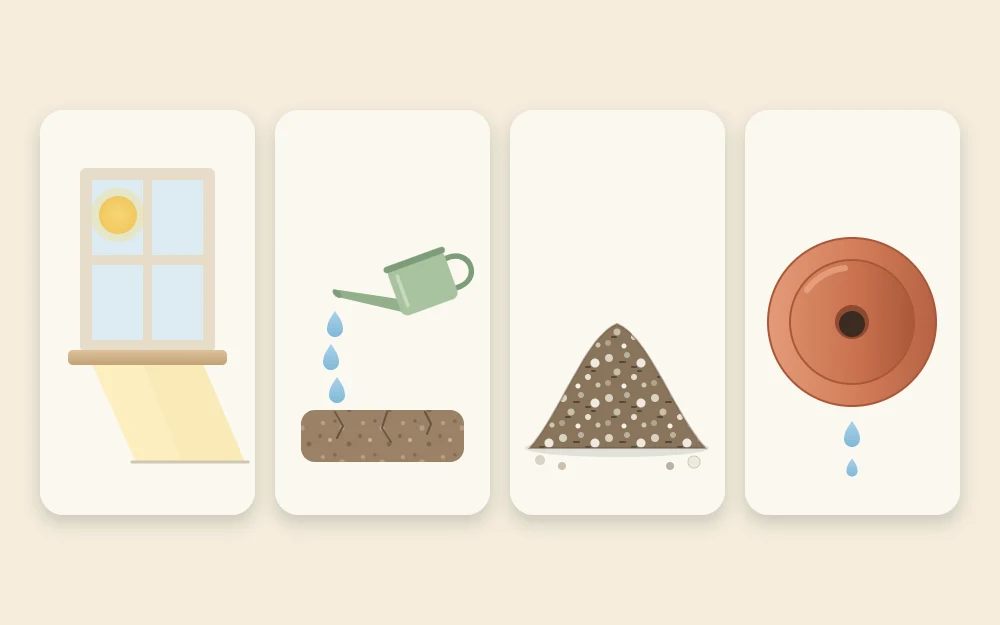
1. Strong light
Indoors, even a bright room gives a plant far less light than open ground outdoors. A desert cactus generally wants the brightest position you have, usually right at a sunny window. The guide to how much light a cactus needs explains how to judge your own windows.
2. Watering by dryness, not by the calendar
There is no correct number of days between waterings. How fast a pot dries depends on the species, the soil, the pot, the light, the temperature, the humidity and the season. The reliable approach is to wait until the mix has dried all the way to the bottom, water thoroughly, let it drain, and then wait again. The full method is in how to water a cactus. Clemson Cooperative Extension’s indoor cacti factsheet names too much water as the most common problem with these plants.
3. A gritty, fast-draining mix
Roots need air as much as water. Dense, peaty potting soil holds moisture around them for too long. A gritty mix, opened up with mineral material such as pumice or perlite, lets water run through and air return quickly. See what goes into a good cactus mix before you repot anything.
4. A pot with a drainage hole
Without a hole, extra water has nowhere to go and collects at the bottom of the pot where you cannot see it. Choose a pot with a drainage hole that is only a little wider than the plant, and empty the saucer after watering.
Your first two weeks with a new cactus
Give a newly bought plant a calm start.
- Inspect it. Look between the ribs and around the base for white cottony fluff, small bumps that do not belong, or soft, dark patches. Keep the plant apart from your other plants for a couple of weeks while you watch it.
- Check the pot. Confirm that it has a drainage hole.
- Check the soil before watering. Push a wooden skewer to the bottom of the pot. If it comes out damp or with dark soil clinging to it, wait. Shop plants are often wetter at depth than the surface suggests.
- Give bright light, but not a sudden blast. A plant that has stood in a dim shop can scorch if it goes straight into hours of hot direct sun. Start it in a bright spot and move it into stronger sun in stages.
- Let it settle. Hold off on fertilizer, and do not rush to repot unless the soil is clearly soggy or the pot has no hole.
Handling without getting hurt
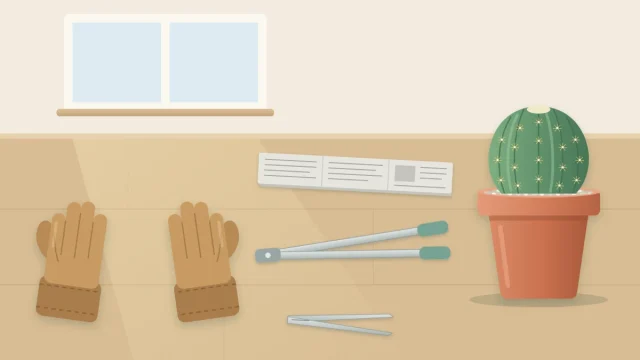
Even small spines break off in skin. Move the plant by its pot whenever you can. When you have to hold the body, use thick leather gloves, kitchen tongs, or a folded strip of newspaper wrapped around the stem as a sling. Thin fabric gloves do not stop spines.
Good to know
Prickly pears and bunny ears cacti carry glochids, tufts of tiny barbed bristles that detach at the lightest touch. Never handle them bare-handed, and place any spiny plant where people, children and pets will not brush against it.
What to expect in the first year
A healthy cactus may add only a small amount of growth in a season, with fresh, brightly colored spines appearing at the crown during the warm months. In winter, when days are short and cool, most desert cacti rest and need far less water.
When something looks off, resist changing everything at once. Check the light, check the soil at depth, and read through the common cactus care mistakes to see whether one of them fits.
Frequently asked questions
Is a cactus a good first houseplant?
It can be, provided you have a bright window. A desert cactus tolerates being left alone far better than it tolerates extra attention. The main requirements are strong light, a pot that drains, a gritty mix, and the patience to let the soil dry fully before watering again.
Should I repot a cactus as soon as I bring it home?
Usually not. Let the plant settle for a couple of weeks while you inspect it and learn how quickly its pot dries. Repot sooner only if the soil is clearly soggy, the pot has no drainage hole, or the plant is unstable. Protect your hands with thick gloves or a newspaper sling when you do.
How do I know whether I have a desert cactus or a forest cactus?
Desert cacti usually have thick round, ribbed or columnar bodies with obvious spines. Forest cacti, such as Christmas and Easter cacti, have flat, jointed green segments that arch or trail and lack stout spines. The difference matters because forest cacti prefer filtered light and more regular moisture.