How to Repot a Cactus Step by Step
When a cactus needs a new pot, how to get it out without getting spined, how deep to set it in fresh gritty mix, and why the first watering should wait.
At a glance
What you need
- Pot with a drainage hole, slightly larger than the old one
- Fresh gritty mix
- Thick leather gloves
- Folded newspaper or cardboard strip
- Tongs for small plants
- Wooden stick or chopstick
- Mesh for the drainage hole
Cacti grow slowly and like a snug pot, so repotting is an occasional job, not a yearly ritual. When it is due, two things matter most: keeping the spines out of your hands, and keeping the roots from sitting wet afterward.
This guide covers how to repot a cactus from start to finish: deciding whether it needs it, getting the plant out without a fight, setting it in fresh gritty mix, and the dry wait that follows.
When to repot
Look for a reason before you start. The usual ones are:
- Roots fill the pot or are growing out of the drainage hole.
- The mix stays wet for a long time, or has broken down into fine, dense material.
- The plant has become top-heavy and tips over easily.
- A newly bought plant is sitting in dense, peaty nursery soil that holds water.
Early in the growing season, as growth resumes in spring, is the usual choice because roots regrow fastest then. Clemson Cooperative Extension’s indoor cacti factsheet advises repotting only when needed, into a pot only slightly larger.
When to wait
Leave a plant alone while it is in bud or flower, and during its winter rest, when damaged roots are slow to recover in cool mix. A healthy plant in a pot that still fits, in mix that still drains fast, gains nothing from being moved.
The exception is a plant in trouble. If the mix is soggy and the plant is declining, get it out now, whatever the season.
What you need
- A pot with a drainage hole, only a little wider than the old one. The guide to the best pots for cactus explains size and material.
- Fresh, dry gritty mix. See the cactus soil guide for what goes into a good one.
- Thick leather gloves.
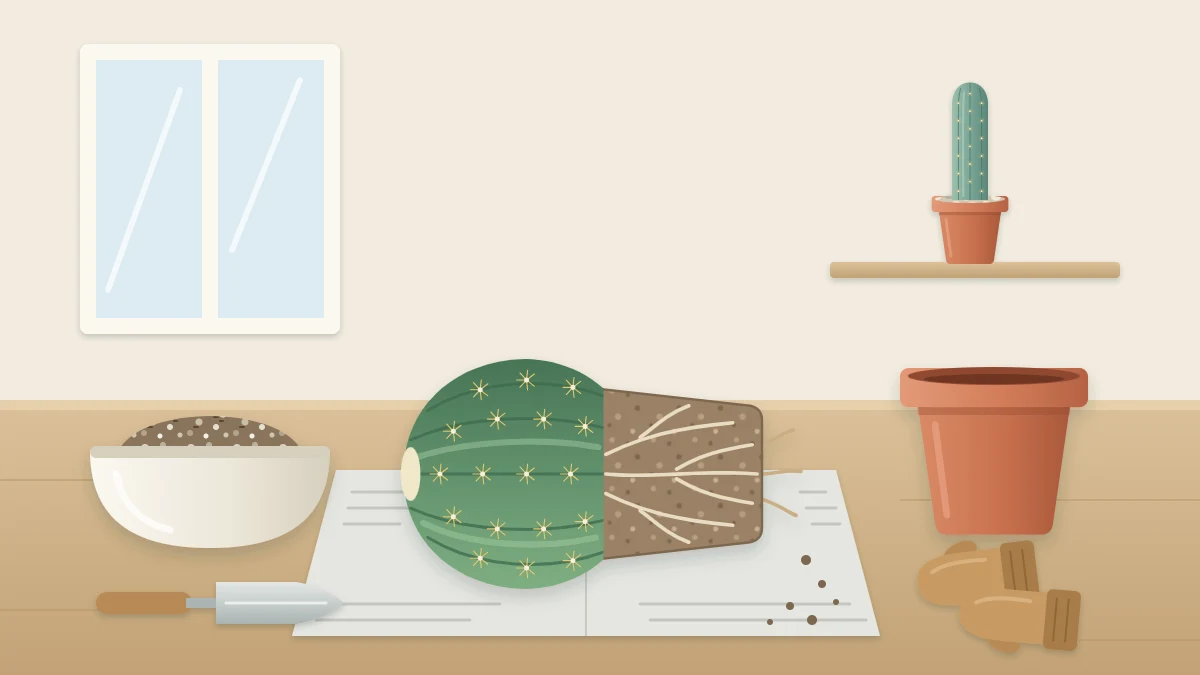
- Several sheets of newspaper folded into a strip, or a strip of cardboard, to use as a sling.
- Tongs for small plants.
- A wooden stick or chopstick, and a scrap of mesh for the drainage hole.
Good to know
Thin fabric gloves do not stop spines. Prickly pears and bunny ears also carry glochids, tiny barbed bristles that detach at a touch, so never handle them bare-handed. Wear eye protection for tall plants or any work at face height. The guide on how to handle a cactus safely goes through the tools one by one.
Repotting step by step
- Let the mix dry. Dry mix falls away from the roots easily, and dry roots are less likely to rot where they break.
- Prepare the new pot. Cover the hole with mesh so the mix stays in, then add enough mix that the plant will sit at the same depth as before.
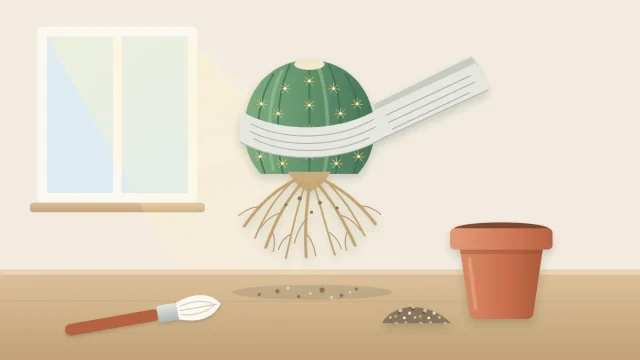
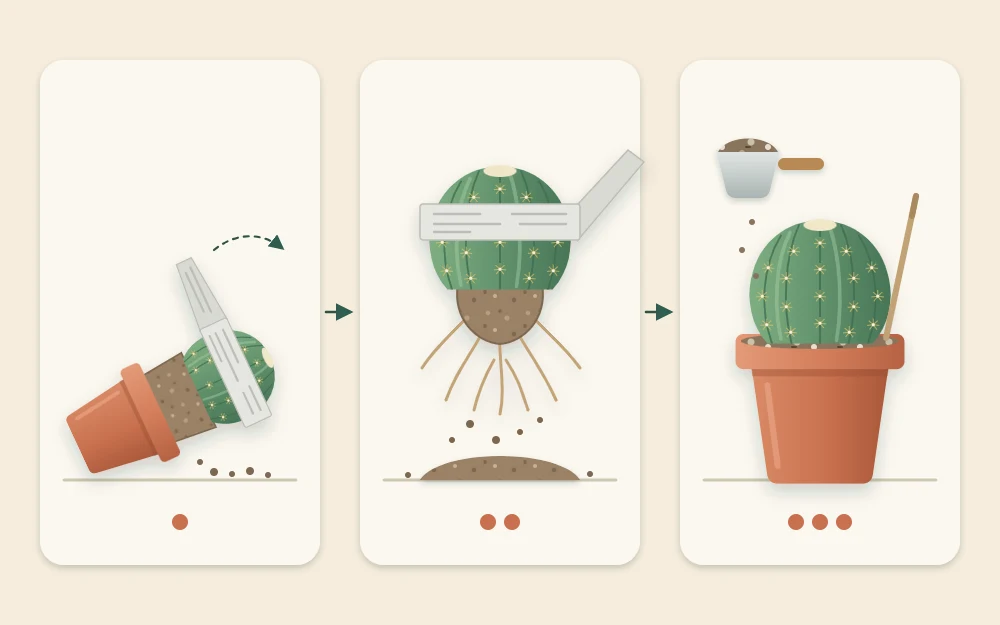
- Wrap the plant. Pass the folded newspaper strip around the body and pinch the two ends together to make a handle. Keep your gloves on as well.
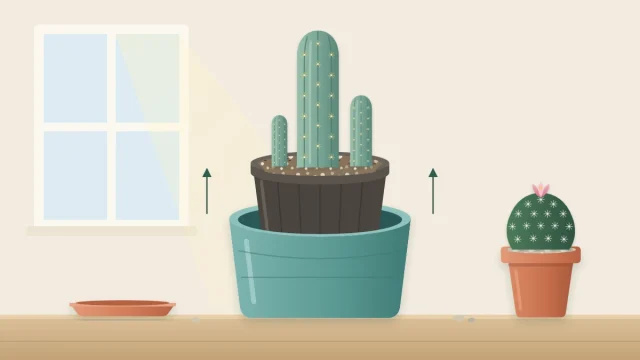
- Ease it out. Tip the pot on its side and tap the rim on the table, or squeeze a plastic pot all the way round. If it sticks, run a blunt knife around the inside wall or push up through the drainage hole with the stick. Do not pull hard on the body.
- Loosen the old soil. Crumble it away with the stick, working from the outside in, and tease apart roots that circle the root ball. You do not need to remove every crumb unless the old soil is dense or soggy.
- Look over the roots. Healthy ones are firm and pale. Snip off any that are dead, hollow or mushy with clean scissors. If something looks wrong, the guide to inspecting cactus roots explains what you are seeing.
- Set the plant. Hold it with the sling in the center of the new pot, with the old soil line level with the new surface.
- Fill and settle. Pour mix around the roots, tap the pot on the table, and work the mix into gaps with the stick. Do not press down near the spines with your fingers.
Getting depth and fill right
A cactus buried deeper than before has damp mix resting against skin that was in the air, and that is a common starting point for trouble at the base. A plant set too high rocks in the pot and breaks new roots as they form.
Leave a gap between the surface of the mix and the pot rim, roughly half an inch (about 1 cm) in a small pot and more in a large one, so water can pool briefly and soak in. A thin top dressing of gravel is optional; it steadies the plant and keeps the base of the stem drier.
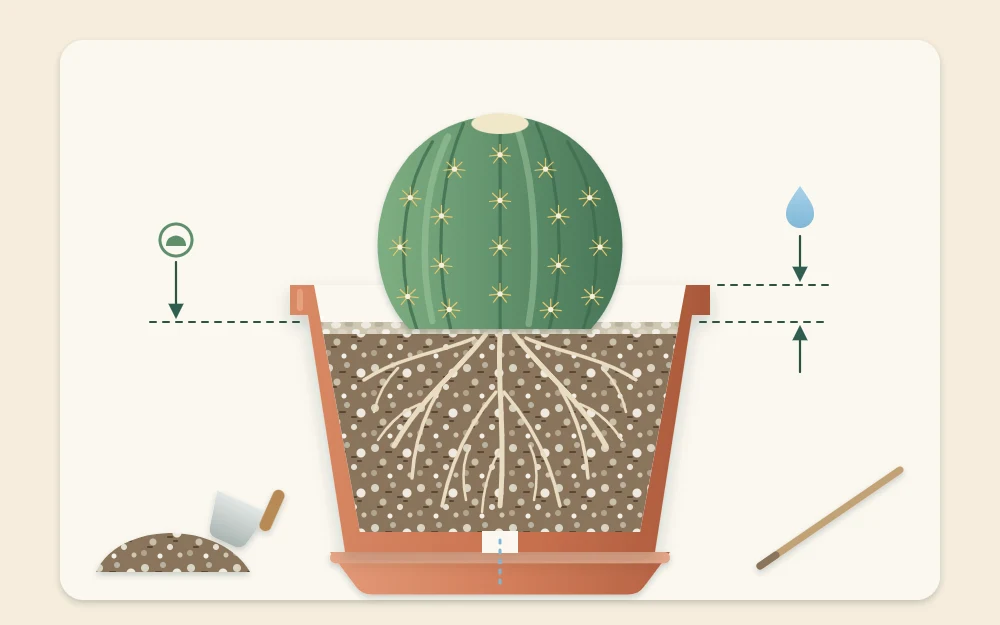
If the plant wobbles, prop it with a few stones or a couple of short stakes until it roots in. Do not bury it deeper to hold it up.
Aftercare: the dry wait
Repotting almost always breaks some roots, and a broken root in wet mix is an open door for rot. So the first watering waits. Clemson’s factsheet suggests several days; when roots were clearly disturbed or trimmed, a week or so gives the damaged ends time to dry and seal. A plant that slid out and in with its root ball intact needs less of a pause.
During the wait, keep the plant in bright shade, out of harsh direct sun, since it cannot take up water to replace what it loses. When you do water, water thoroughly, let the pot drain, and then go back to watering only when the mix has dried through.
Tip
Hold off on fertilizer after repotting. Fresh mix already carries nutrients, and feeding is best left until the plant is clearly growing again.
What to expect afterward
A repotted cactus often sits still for a few weeks while it grows new roots. It may look slightly shrunken in that time. This is normal, and extra water does not speed it up.
Once you see fresh growth at the crown, move the plant back to its usual bright spot over a week or two instead of all at once. Forest cacti such as Christmas cactus are repotted in much the same way, but into a mix with more organic matter, and they should not be left dry for long.
Frequently asked questions
Should I water a cactus right after repotting?
Usually not. Roots get broken during repotting, and broken ends sitting in wet mix can rot. Waiting several days, or a week or so if roots were trimmed or badly disturbed, lets them dry and seal first. Keep the plant in bright shade meanwhile, then water thoroughly.
How much bigger should the new pot be?
Only a little. A pot slightly wider than the root ball gives roots room without surrounding them with a large volume of mix that stays wet for a long time. Moving a small cactus into a much larger pot is a common cause of soggy soil.
How do I repot a cactus without getting stabbed?
Wear thick leather gloves and wrap the body in a folded strip of newspaper or cardboard, pinching the ends together as a handle. Use tongs for small plants. Tip the pot and let the plant slide out instead of pulling, and wear eye protection for tall plants.