Prickly Pear Cactus Care: Pads, Glochids and Sun
How to grow a prickly pear or bunny ears cactus well: the sun it needs, how to water and pot it, what its pads tell you, and how to move it without picking up glochids.
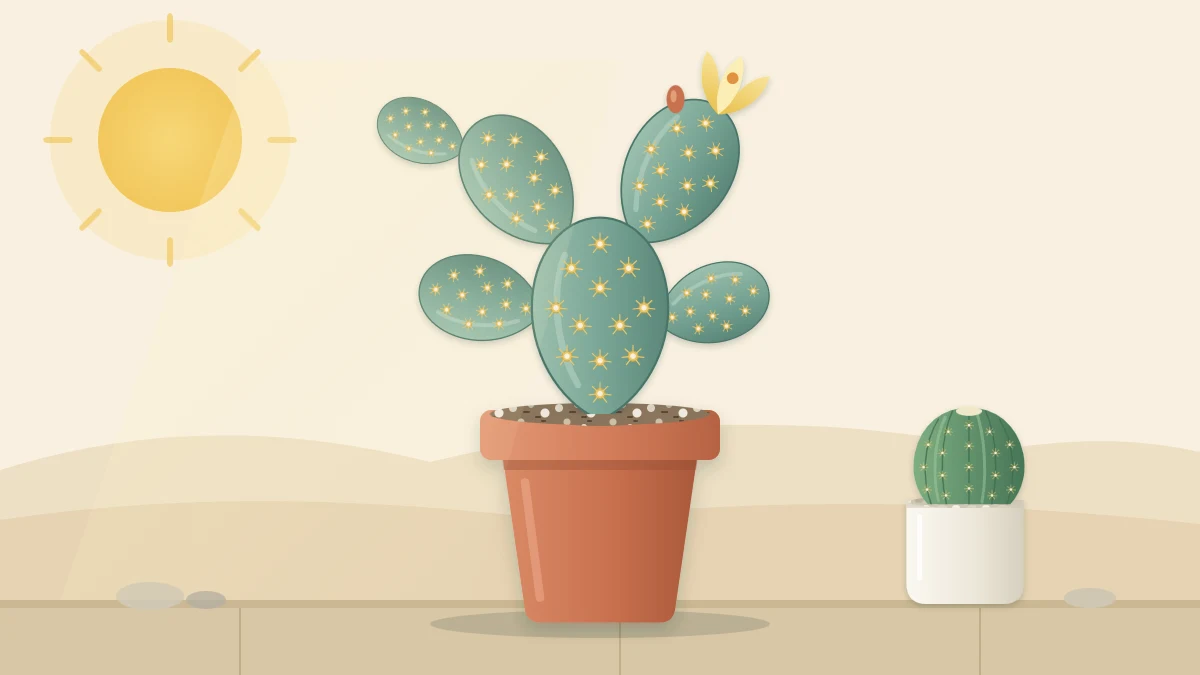
Prickly pears are the cacti built from flat, jointed pads stacked one on another. They are vigorous, forgiving about most things and very unforgiving about two: weak light and careless hands. Good prickly pear cactus care is mostly a matter of giving the plant a great deal of sun and learning to move it without touching it.
The group is the genus Opuntia, and it is a large one. Some kinds carry long, obvious spines, some look almost smooth, and the popular bunny ears cactus looks soft enough to stroke. That impression is the one to unlearn first.
Know the plant: pads, areoles and glochids
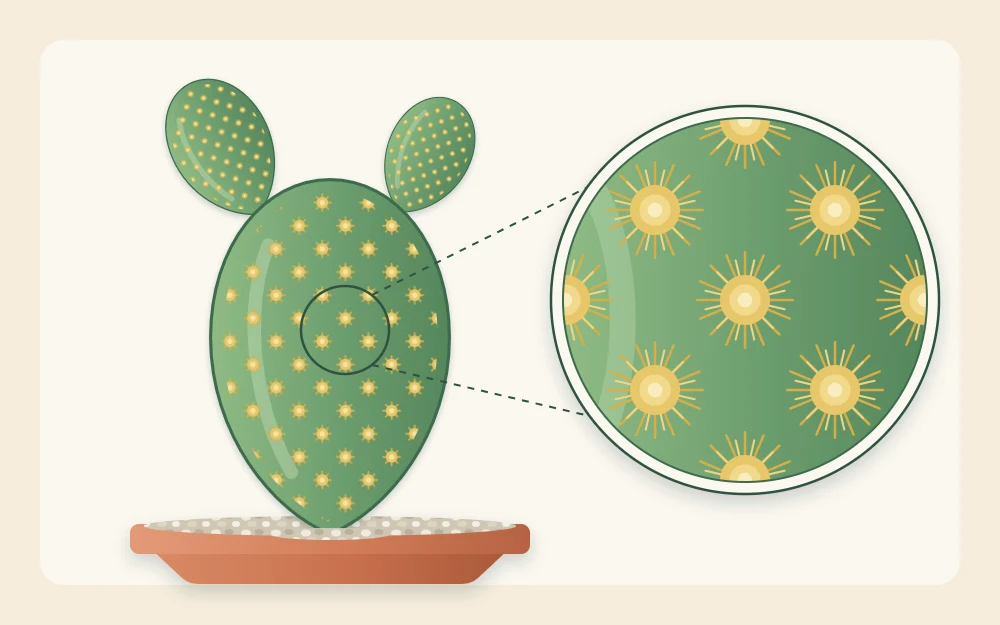
Each pad is a flattened stem. It stores water and carries a regular pattern of areoles, the small cushions that spines grow from. New pads and flowers emerge from areoles along the upper edge of an older pad, which is why the plant builds itself up in a branching stack.
Every prickly pear also has glochids: tiny barbed bristles packed into each areole in tufts. They detach at the lightest touch, lodge in skin and are hard to see. NC State Extension’s prickly pear profile notes that these very small barbed spines cause skin irritation and advises wearing protective gloves when handling the plants.
Bunny ears (Opuntia microdasys) has no long spines at all, only neat rows of fuzzy golden, white or reddish tufts. Those tufts are made entirely of glochids, so the plant that looks gentlest is the one that most often catches people out.
Handling a prickly pear without getting stuck
Treat every part of the plant as something you never touch with bare skin, including pads that have fallen off and the dust at the bottom of the pot.
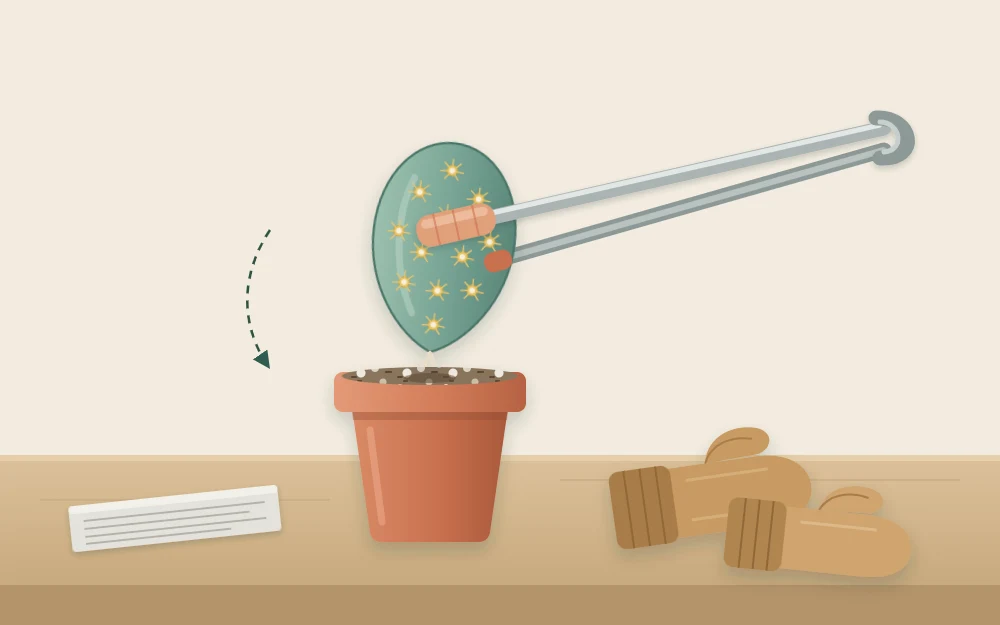
- Move pads with long tongs, ideally with padded tips so the skin of the pad is not crushed.
- For a whole plant, wrap a folded newspaper or strip of cardboard around the stack as a sling and lift by that.
- Wear thick leather gloves as a second layer, not the only one. Thin fabric gloves do not stop spines, and glochids cling to cloth and transfer to your hands later.
- Wear eye protection when you work with a tall plant or at face height.
Placement matters as much as technique. Keep the pot away from walkways, door swings and low shelves, where a sleeve, a child or a curious pet can brush against it. The full method for lifting, tilting and unpotting is in the guide to handling a cactus safely.
Good to know
If glochids get into your skin, lift them off with sticky tape, use tweezers for any visible spines and wash the area. Seek medical advice for anything near the eye, for deep punctures, or for redness and swelling that does not settle.
Light: as much sun as you can give
Prickly pears are among the most sun-hungry cacti commonly grown in pots. Indoors, the brightest window you have is the starting point: in the Northern Hemisphere that usually means an unobstructed south- or west-facing one.
The pads tell you when light is short. New pads that come in thin, narrow, elongated or paler than the older ones, and pads that droop or lean hard toward the glass, are commonly associated with too little light. Stretched pads do not fill out later, so the fix is a brighter position for the growth still to come. The guide to cactus light requirements explains how to judge a window and how to increase exposure without scorching the skin.
Watering: thorough, then dry
During active growth, water thoroughly until it runs from the drainage hole, empty the saucer, and then wait until the mix has dried all the way through before watering again. How long that takes depends on the pot, the mix, the light, the temperature and the season, so check the mix instead of counting days. The steps are set out in how to water a cactus.
Pads that wrinkle, thin out or flop are often a sign the plant has used up its stored water, and they usually firm up after a good soak. The same look is normal during a cool winter rest, when the plant is kept much drier and many kinds shrink and lean. Wrinkling in mix that is still wet is a different matter: check the roots and the base of the plant before adding more water.
Mix and pot
Use a gritty, fast-draining mix with a generous share of pumice, perlite or coarse grit, in a pot with a drainage hole. NC State Extension notes that wet or soggy soil can result in root rot, and a dense, moisture-holding mix is the usual way a prickly pear ends up in it.
These plants grow upward and outward faster than their roots spread, so they become top-heavy. A heavy terracotta or ceramic pot with a wide base keeps the stack upright better than a light plastic one. Go up only slightly in size when you repot.
Cold tolerance varies by species
Do not assume all prickly pears share the same hardiness. Some species, such as the eastern prickly pear (Opuntia humifusa), grow outdoors through cold winters in well-drained ground, where their pads shrivel and lie flat until spring. Others, including bunny ears, are tender and need to come indoors before frost. Find out which species you have before leaving a pot outside.
Common problems
Most trouble traces back to water, light or insects, and one symptom rarely points to one cause.
- White cottony tufts or flat brown bumps on pads. Scale and cochineal insects can infest prickly pears. Isolate the plant and see the guide to cactus pests for identification and removal.
- Soft, dark or translucent patches near the base. Often linked to rot in mix that stays wet. Check the moisture at depth and inspect the roots.
- Pads dropping. Possible causes include a knock, overly wet or very dry roots, low light or a sudden change of position. Look at recent watering and moves before changing anything.
- Tan, corky patches on the sunny side. Commonly sunburn after an abrupt move into stronger light. The marks stay, but new pads grow clean.
Frequently asked questions
Is bunny ears cactus soft to touch?
No. Bunny ears has no long spines, but each fuzzy tuft is a cluster of glochids, tiny barbed bristles that detach at a light touch and lodge in skin. Handle it only with tongs, a folded newspaper sling and thick leather gloves, and place it where nobody will brush past it.
Why are the pads on my prickly pear drooping?
There are several possibilities. Pads commonly wrinkle and flop when the plant is very dry or resting in winter, and thin new pads can bend in low light. Drooping in mix that is still wet may point to root trouble instead. Check the moisture at depth, the light and the base of the plant before acting.
Can a prickly pear cactus stay outside in winter?
It depends on the species. Some, such as eastern prickly pear, are hardy outdoors in cold winters when the ground drains well, while others, including bunny ears, are tender and need to come inside before frost. Identify your plant first, and keep any potted prickly pear from sitting in cold, wet mix.