Best Cactus for Beginners: 8 Forgiving Plants to Start With
Eight widely sold cacti that tolerate beginner mistakes, with the shape, light and handling notes for each, plus a checklist for choosing a healthy plant in the shop.
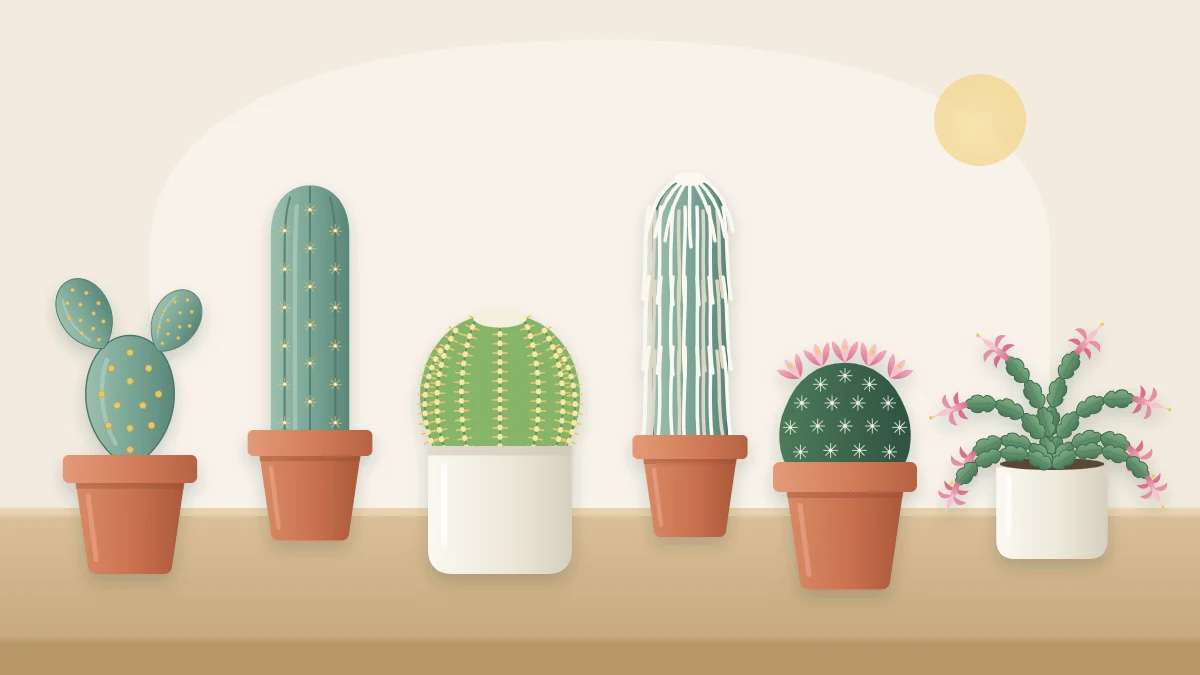
Choosing a first cactus is easier when you know which plants put up with a learning curve. The best cactus for beginners is one that is widely sold, grows at a steady pace, shows clearly when something is off, and recovers from the occasional late watering or imperfect window.
The eight plants below fit that description. None of them is indestructible, and all but one are desert cacti that need strong light and a mix that dries between waterings. If you are new to these plants, the starting guide to cactus care for beginners explains those basics.
Eight forgiving cacti at a glance
| Plant | Shape | Light | Handling note |
|---|---|---|---|
| Pincushion cactus | Small globe or cluster | Bright, some direct sun | Some kinds have hooked spines |
| Golden barrel | Ribbed globe | Very bright, direct sun | Stiff, sharp spines |
| Bunny ears | Flat oval pads | Very bright, direct sun | Glochids; never touch bare-handed |
| Chin cactus | Small ribbed globe | Bright, less direct sun | Curved spines, fairly easy |
| Easter lily cactus | Globe with offsets | Bright, some direct sun | Short, sharp spines |
| Old man cactus | Hairy column | Very bright, direct sun | Hair hides sharp spines |
| Columnar Cereus | Tall ribbed column | Very bright, direct sun | Gets heavy and tall |
| Christmas cactus | Arching flat segments | Bright filtered light | No stout spines |
Small globes for a sunny windowsill
Pincushion cactus (Mammillaria)
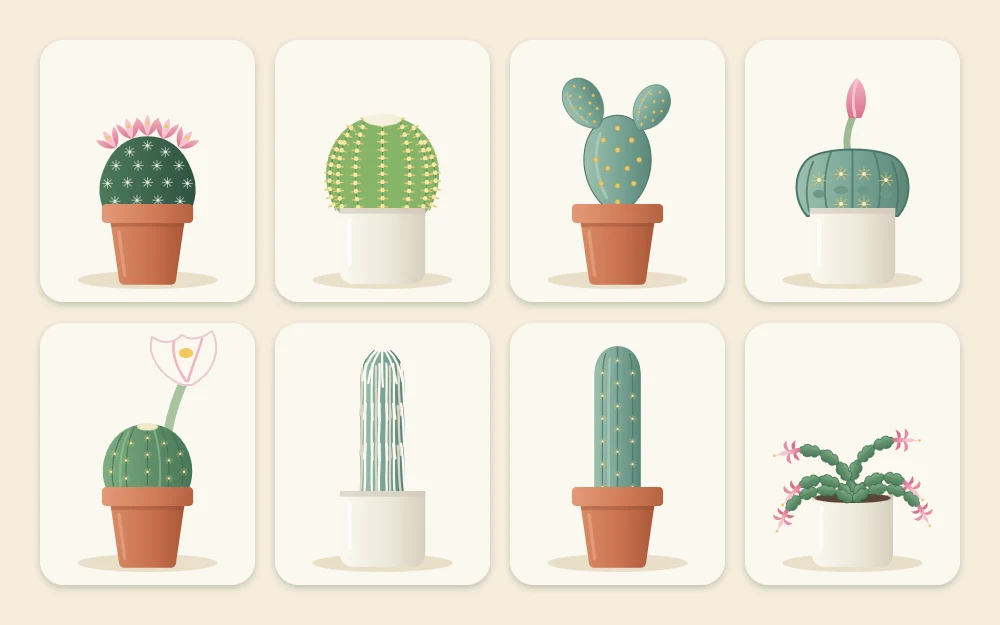
Pincushion cacti are small globes or clusters covered in separate tubercles instead of ribs. Many stay under a few inches across for years and flower readily, often in a ring around the crown. They want a bright sill with some direct sun. One thing to know: some kinds have hooked spines that catch on skin and sleeves, so move them by the pot.
Chin cactus (Gymnocalycium)
Chin cacti are compact ribbed globes with a small bump beneath each areole. They are among the more tolerant choices for a window that gets bright light but only a little direct sun, and they can scorch in harsh afternoon exposure. The brightly colored grafted “moon cactus” sold alongside them is a different proposition and often shorter-lived, so pick a plain green plant to begin with.
Easter lily cactus (Echinopsis)
This rounded, ribbed cactus makes offsets freely around its base, so a single plant gradually becomes a clump. Mature plants can produce large trumpet-shaped flowers that last only a day or so. It likes bright light with some direct sun and tends to flower better after a cool, mostly dry winter rest.
Barrels and columns for the brightest spots
Golden barrel
A ribbed globe with golden-yellow spines and a woolly crown, the golden barrel grows slowly and keeps a tidy shape in strong light. In a dim spot it leans and narrows at the top. The spines are stiff and very sharp. The golden barrel cactus care guide covers its light and winter needs.
Old man cactus (Cephalocereus senilis)
A slow-growing column wrapped in long white hair, this plant is bought for its looks and is undemanding when given plenty of sun and a gritty mix. The hair is soft, but it hides sharp spines, so do not stroke it. Water at the soil and keep the hair dry.
A columnar Cereus
Ribbed, often blue-green columns sold simply as Cereus grow faster than most cacti, which makes them satisfying for a beginner. They need the brightest window you have, or the new growth comes in thin. Plan for height: use a heavy pot so the plant does not tip, and expect to move it eventually.
Bunny ears: charming, with a catch
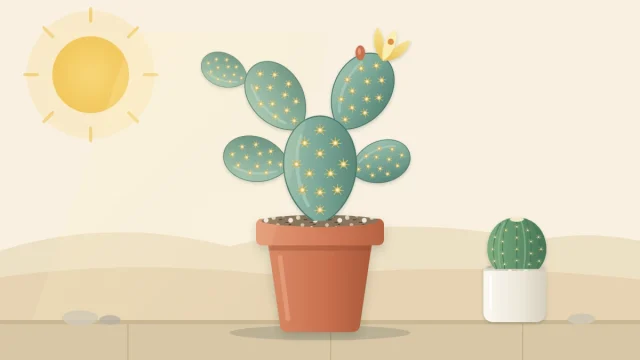
Bunny ears (Opuntia microdasys) is a small prickly pear with flat oval pads dotted with fuzzy tufts. It tolerates dry spells and bright sun well. The catch is that the tufts are glochids, tiny barbed bristles that detach at the lightest touch. NC State Extension’s bunny ears profile has more detail, and its Opuntia pages note that glochids cause skin irritation and advise protective gloves.
It is a poor choice for a home where children or pets could reach it. If you choose it, read the prickly pear cactus care guide first.
Good to know
For any spiny cactus, use thick leather gloves, tongs or a folded newspaper sling when you lift or repot it. Thin fabric gloves do not stop spines, and glochids cling to fabric. Visible spines come out with tweezers and glochids lift off with sticky tape. Seek medical advice for anything near an eye, deep punctures, or redness and swelling that does not settle.
Christmas cactus: the odd one out
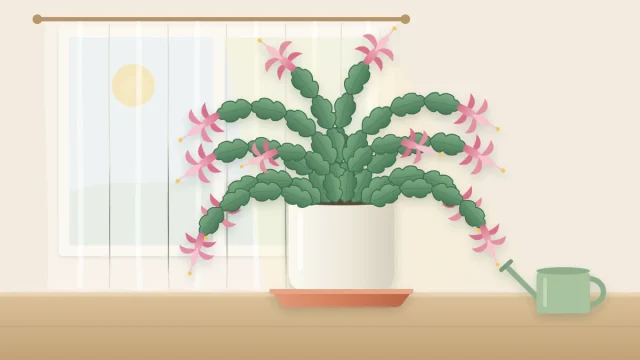
Christmas cactus is a forest cactus from humid, shaded habitats, with flat segments and no stout spines. It wants bright filtered light instead of hot direct sun, and more regular moisture than the others on this list, though never a soggy mix. That makes it a good choice for homes without a sunny windowsill, as long as you do not treat it like a desert plant. The Christmas cactus care guide explains the differences.
How to pick a healthy plant in the shop
- Firm body. The plant should look plump and evenly colored, with no soft, dark or sunken patches, especially near the soil line.
- No white fluff. Check between ribs and around the crown for cottony clusters, which may be mealybugs.
- Not wobbly. Gently tilt the pot. A plant that rocks loosely may have few roots.
- Even shape. A thin, pale, pointed top suggests it has been kept in poor light.
- No glued-on decorations. Skip plants with artificial flowers stuck to them, painted plants, and pots with gravel glued across the surface, which stops you checking the soil.
Check under the pot for a drainage hole too. If there is none, plan to move the plant into a pot that has one.
A note on pets and children
Spines are a hazard with any cactus, whatever else is true of the plant, so place all of these out of reach. For questions about a particular plant and animals, look up the exact species in the ASPCA plant list, and contact a veterinarian or poison control if a pet or child eats part of a plant.
Frequently asked questions
What is the easiest cactus to grow indoors?
Small pincushion and chin cacti are among the easiest for a bright windowsill, because they stay compact and do not need the intense sun that barrels and tall columns want. Where there is no sunny window, a Christmas cactus, which prefers bright filtered light, is often the more realistic choice.
Is bunny ears cactus good for beginners?
It is easy to grow but awkward to live with. The fuzzy tufts on its pads are glochids, tiny barbed bristles that detach at a touch and irritate skin. It suits a careful adult with a very bright window and is a poor fit for homes where children or pets could reach it.
What should you check before buying a cactus?
Look for a firm, evenly colored body with no soft or dark patches near the soil. Check between the ribs for white cottony clusters, tilt the pot to see that the plant is not loose, and avoid plants with glued-on flowers, paint or gravel glued over the soil surface.